
Alkanna lutea
Alkanna lutea
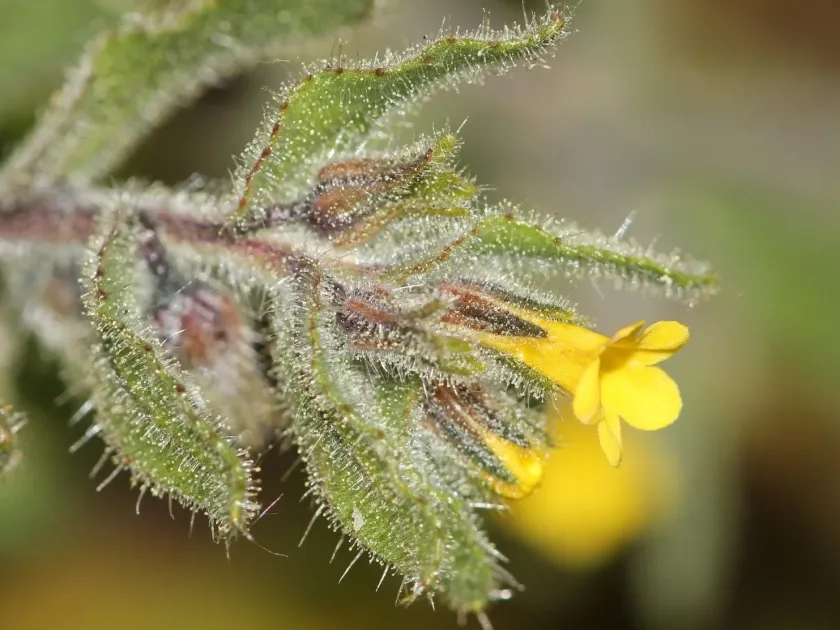
Description
Sowing dates
Alkanna lutea, a member of the Boraginaceae family, requires specific conditions for successful germination. Sowing is best performed in early spring when soil temperatures stabilize, allowing the seeds to break dormancy efficiently.
Seed stratification is recommended to improve uniformity of emergence. The seeds should be sown at a shallow depth in well-prepared, loose soil to prevent burial of the small sprouts.
Row spacing should be sufficient to allow for mechanical cultivation, as the crop is slow-growing in its early stages. Effective weed management during this period is essential for the crop's establishment.
Optimum density depends on the targeted production goals. Proper plant spacing ensures that individuals receive enough resources to develop strong root systems, which is the primary objective of cultivation.
Timing the sowing based on regional climate data ensures that the plant develops adequate root biomass before the onset of the hottest summer months or winter dormant periods.
Growing requirements
This crop thrives in full sun, which is critical for the synthesis of pigments in its roots. It is well-adapted to arid or semi-arid climates, demonstrating significant drought tolerance.
Soil requirements prioritize well-drained, porous environments. Rocky or sandy soils are ideal, as they prevent waterlogging, which is a major threat to the plant's health.
The plant prefers a neutral to slightly alkaline soil pH. Maintaining the correct soil structure is more important than heavy fertilization, as the crop is adapted to nutrient-poor environments.
Excessive nitrogen application should be avoided, as it encourages leafy growth rather than the accumulation of desired compounds within the root system.
Regional climate conditions in the Mediterranean style are optimal, where the plant can withstand periods of summer drought due to its deep-reaching taproot.
Yield
The harvestable part of Alkanna lutea is the root system. Accumulation of chemical compounds, specifically alkannin derivatives, typically requires a cultivation cycle of two to three years.
Harvesting is performed by mechanical lifting of the roots. Timing is crucial; harvesting should occur when the concentration of active pigments is at its maximum, usually during the dormant season.
Post-harvest processing involves washing, removing debris, and drying the roots under controlled conditions. Gentle handling is required to preserve the integrity of the chemical compounds.
Yield consistency relies on maintaining appropriate crop spacing and ensuring that the plants are not overcrowded, which could lead to thinner, less valuable roots.
The resulting root mass is valuable for the dye and cosmetics industries, making the economic return dependent on the quality and pigment concentration of the harvest.
Main diseases and pests
The main threats to this crop involve moisture-related pathogens. Root rots and fungal infections can devastate a crop if drainage is not managed effectively.
Pests such as soil-dwelling insects or leaf-feeding beetles can occasionally cause damage. Monitoring fields for signs of infestation during the growth phase is recommended.
Competition from weeds is a significant concern during the first year of growth. Once established, the crop is more resilient, but early intervention is necessary to prevent yield loss.
Preventative measures include crop rotation and ensuring that the site was not previously infested with persistent soil-borne diseases.
- Root rot diseases (Rhizoctonia species).
- Infestation by soil-dwelling insect larvae.
- Competition from invasive weeds.