
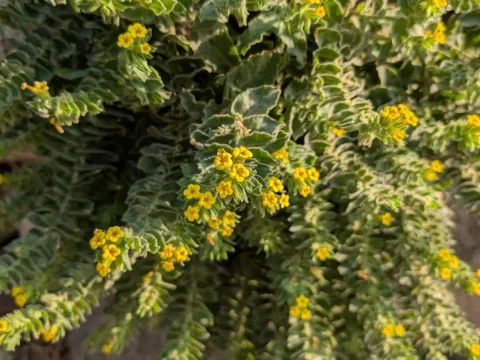
Alkanna orientalis
Alkanna orientalis
Alkanna orientalis is typically propagated through seeds, which require specific conditions for successful germination in agricultural settings.
What the section contains
Alkanna orientalis
Sowing is recommended either in late autumn or early spring when soil temperatures range between 5 and 10 degrees Celsius for optimal growth.
Due to seed dormancy, a period of cold stratification for 4-6 weeks is highly beneficial to significantly improve the overall germination rate.
Seeds should be planted at a shallow depth of approximately 1-2 centimeters, ensuring they are lightly covered with fine, friable soil.
Row spacing of 50 centimeters is advised to facilitate mechanical cultivation and prevent crowding as the plants develop their taproot systems.
The plant belongs to the Boraginaceae family and is well-adapted to arid and semi-arid regions with well-drained, porous soil structures.
Sandy or stony soils with a neutral to slightly alkaline reaction are preferred, as these prevent water stagnation which can damage the roots.
Alkanna orientalis thrives in full sun exposure and is highly tolerant of drought once the plants have established their deep root systems.
Avoid heavy, clay-rich soils that retain excess moisture, as these increase the risk of root rot and inhibit the production of secondary metabolites.
Good soil aeration is critical; therefore, incorporating sand or fine grit into the planting rows can improve the yield and health of the crop.
The primary agricultural output is the root, which contains the valuable red pigment known as alkannin, widely used in food and cosmetic industries.
Yields are typically harvested during the second year of growth, allowing the plants enough time to accumulate sufficient pigment density.
Average yield of dry roots per hectare ranges from 0.7 to 1.3 tons, depending on planting density, soil fertility, and effective moisture management.
Harvesting at the peak of the plant's vegetative development ensures the highest concentration of active compounds, resulting in a higher quality product.
Optimizing planting patterns and maintaining clean, weed-free conditions are the most significant factors in maximizing the annual root yield.
As a robust xerophytic plant, Alkanna orientalis is generally resistant to many common pests, though root-feeding insects can occasionally be problematic.
Fungal pathogens associated with excessive soil moisture, such as Pythium or Fusarium species, represent the most severe threat to crop survival.
Competition from aggressive weeds is a primary concern during the first months of growth, as the plant develops relatively slowly during its seedling stage.
Proper crop rotation, avoiding land previously planted with other Boraginaceae, is essential to mitigate the buildup of soil-borne pathogens and pests.
Regular monitoring of field edges for invasive plant species helps to maintain the purity and vitality of the Alkanna orientalis plantation.
Harvesting usually occurs at the end of the second or third growing season, when the root diameter reaches the desired commercial size.
Mechanical extraction is performed using plows or root-diggers to minimize root breakage and ensure complete removal from the soil profile.
Immediate post-harvest cleaning is necessary to remove soil particles and prevent the darkening of the roots, which can affect the purity of the dye.
Drying must be conducted in dark, well-ventilated rooms to prevent the degradation of light-sensitive alkannin compounds within the root tissue.
Final storage should be in cool, dry, and dark conditions to maintain the pigment's integrity until it is processed for industrial or pharmaceutical use.