


Reference · Crops
Cocklebur
Xanthium
Cocklebur is an annual weed that typically begins germination when soil temperatures reach 10–12°C in the spring. Optimal emergence occurs in late spring, following consistent warming periods.
2
items
What the section contains
Marketplace
Products in this section · 12


Alfa-Prometrin
Zhejiang Zhongshan Chemical Industry Group Co., Ltd.
Herbicides
1
1
20 offers
4.92 €per pack
Buy


Cocklebur
The seeds are characterized by a period of dormancy, allowing them to remain viable in the soil for several years. This trait makes long-term management strategies essential for any agricultural area.
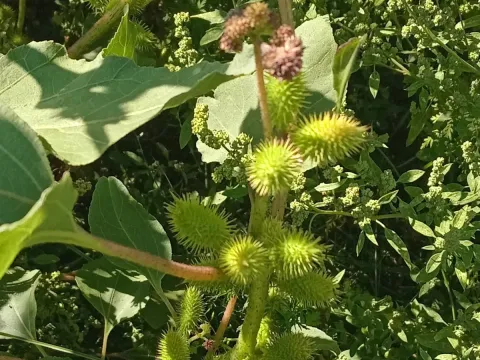
Seed dispersal is facilitated by specialized hooked burs that attach to animal fur and human clothing. This adaptation allows the plant to colonize new territories efficiently across large landscapes.
Agricultural control methods rely heavily on mechanical intervention, such as harrowing to encourage germination followed by cultivation to destroy young seedlings before they develop deep roots.
Maintaining a clean field surface is crucial during the early stages of crop development. Due to the rapid initial growth of cocklebur, it can easily overshadow newly planted crops, competing for space and nutrients.
Belonging to the Asteraceae family, the plant shows significant plasticity in various environmental conditions. It thrives in high-light environments where solar radiation is abundant.
While tolerant of various soil types, cocklebur prefers fertile sandy or loamy soils with adequate moisture. It is commonly found in riparian zones, pastures, and disturbed land areas.
The plant exhibits remarkable drought tolerance, which is supported by a deep and efficient root system. This allows it to persist even in arid regions where other vegetation might struggle.
Growth is most intensive at temperatures ranging between 20°C and 25°C. The species is highly adaptive to fluctuating weather conditions, ensuring survival through moderate heat stress.
Cocklebur often acts as a pioneer species in disrupted ecosystems, quickly covering bare ground. Its large biomass accumulation suppresses the emergence of competing native plant species.
Cocklebur is generally robust against many common pathogens due to its secondary metabolites. However, in conditions of extreme humidity, it can suffer from fungal infections like powdery mildew.
The most significant threat posed by the plant is its toxicity to livestock. Young seedlings contain compounds that can cause systemic poisoning, making it a liability in grazing pastures.
In the agricultural sector, the presence of cocklebur results in reduced crop yields due to competition for water and essential nitrogen nutrients. It also serves as a host for various insect pests.
Integrated weed management is often required, involving both mechanical and chemical control measures. Consistent monitoring is necessary to prevent the plant from reaching the seed-bearing stage.
- Infestations by specific leaf-feeding beetles.
- Fungal rust infections in high-density populations.
- Potential transmission of viral plant diseases.
- Allergenic reactions caused by its wind-borne pollen.