
Spiny cocklebur
Xanthium spinosum L.
Description
Growing requirements
The spiny cocklebur (Xanthium spinosum L.) is a member of the Asteraceae family, well-known for its invasive nature and agricultural impact.
Originating from South America, this plant has become naturalized in many regions across the globe, especially in warm, temperate environments.
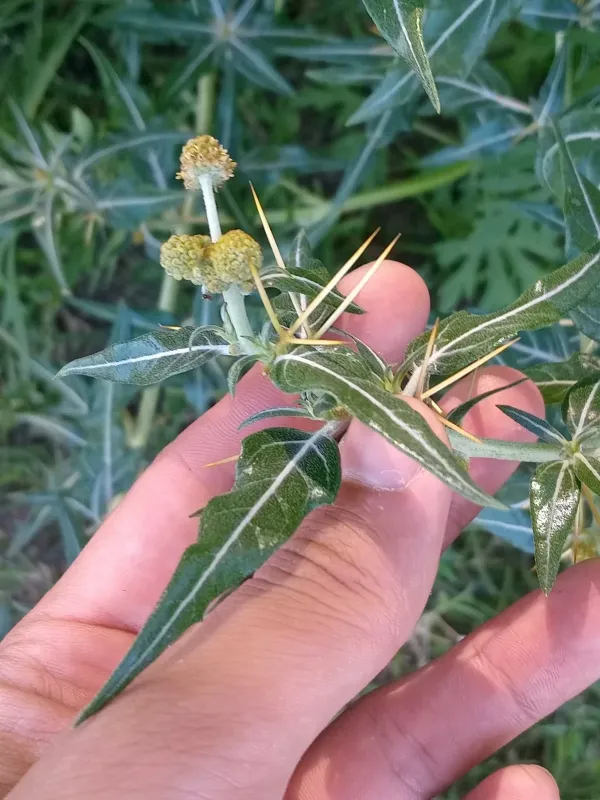
The plant features distinct yellow, three-forked spines located at the base of leaves, which are its most recognizable botanical characteristic.
It prefers sunny, open spaces and is highly adaptable, often found on disturbed soils, roadsides, and overgrazed pastures where competition is low.
While it thrives in various soil types, it requires sufficient warmth for germination, typically sprouting during the late spring and early summer seasons.
Main diseases and pests
The plant can be affected by various fungal pathogens such as rust, which can manifest as dark spots on the foliage during humid conditions.
Insects like seed-feeding weevils can significantly reduce the number of viable seeds, acting as natural biological agents of control.
The primary agricultural threat involves direct competition with crops for water and mineral nutrition, often leading to reduced yields in row crops.
Integrated management includes physical removal before the seeds mature, as the burrs are highly persistent in the soil seed bank.
- Crop rotation to break the life cycle of the infestation.
- Application of selective herbicides during the rosette stage of development.
- Cleaning of agricultural machinery to prevent the spread of spiny seeds between fields.