
Rough cocklebur
Xanthium strumarium L.
Description
Growing requirements
Rough cocklebur (Xanthium strumarium) is an annual herbaceous plant belonging to the Asteraceae family. While primarily recognized as a persistent weed in agricultural systems, it possesses significant botanical and pharmacological properties that define its role in various ecosystems.
Originating from North America, this species has achieved a global distribution, thriving in temperate and subtropical climates. Its ability to adapt to diverse environments has allowed it to occupy various habitats, including disturbed soil, riverbanks, and productive farmlands.
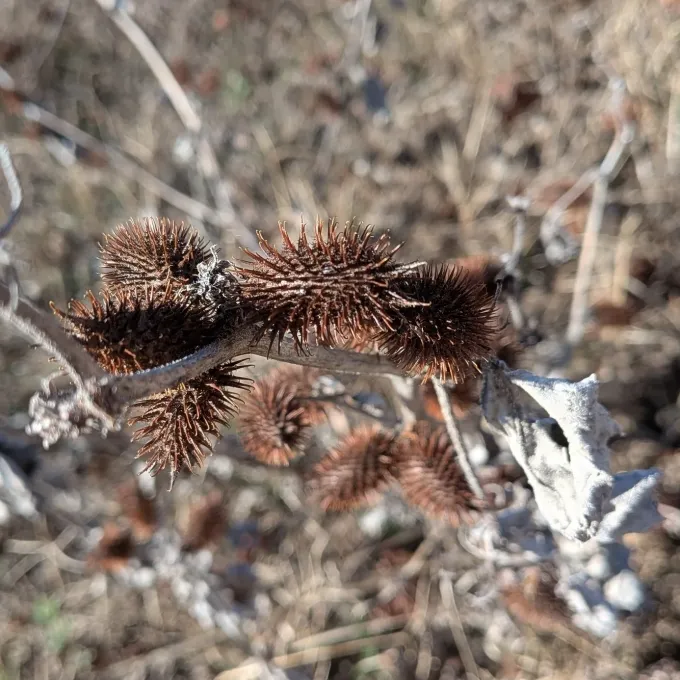
The morphology of the plant is characterized by a sturdy, branched stem reaching significant heights and large, alternate, simple leaves. Its reproductive strategy centers on the production of spiny, hooked burrs, which facilitate long-distance dispersal via mammals and human activity.
The species requires high light intensity and adequate soil moisture for optimal growth. It is intolerant of cold conditions and typically initiates growth during late spring once temperatures remain consistently high, making it a competitive species in mid-summer crops.
From an industrial perspective, the plant is harvested for its medicinal potential. It contains essential iodine compounds, alkaloids, and phenolic acids. These components are extracted for the development of topical treatments and anti-inflammatory formulations used in traditional medicine.
Main diseases and pests
Diseases affecting this plant include various fungal pathogens such as leaf rusts and leaf spots. These infections can inhibit the metabolic processes of the plant, often leading to necrosis of the foliage and significant biomass loss, which directly impacts the quality of the harvested botanical material.
Insect pests such as the cocklebur weevil play a dual role by impacting seed production. These insects deposit eggs into the developing burs, causing larvae to feed on the interior seeds, which effectively reduces the plant's spread and its overall vigor during the late stages of development.