
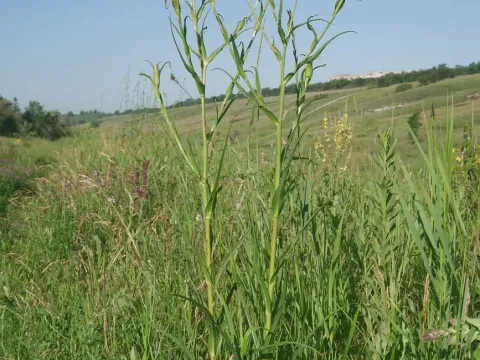
Tragopogon dasyrhynchus
Tragopogon dasyrhynchus
Tragopogon dasyrhynchus, belonging to the Asteraceae family, is a robust plant species with emerging value as a forage and nutritional crop. Sowing should ideally occur in early spring when soil temperatures reach a consistent range of 5–8 degrees Celsius.
What the section contains
Tragopogon dasyrhynchus
Preparing the seedbed involves deep plowing and leveling, which is vital for the germination of its relatively small seeds. A firm, well-worked soil structure ensures optimal moisture contact and faster emergence.
The recommended sowing depth is 2–3 centimeters. Placing seeds deeper than this threshold can significantly reduce the vigor of seedlings and delay development during the critical early stages of growth.
Standard row planting with 15–20 centimeter spacing is the most effective approach. This configuration optimizes space for root development while facilitating mechanized weed control between the rows.
Seeds typically germinate within two weeks. During this phase, maintaining consistent soil moisture is essential, as the young seedlings are highly sensitive to drought until their root systems are established.
This species thrives in well-drained, fertile chernozem soils with a neutral pH level. It displays notable drought resistance once mature, thanks to a deep, penetrating taproot that accesses subsoil water reserves.
Tragopogon dasyrhynchus is highly heliophilic and requires full sun exposure to achieve maximum biomass. Shaded areas are unsuitable and result in stunted growth and lower nutrient concentration in the leaves.
The plant is adapted to continental climate patterns, managing large diurnal temperature fluctuations effectively. However, it is sensitive to waterlogged soils, which can induce root rot and diminish crop quality.
Fertilization should prioritize a balance of nitrogen for vegetative growth and phosphorus for root development. Soil tests are recommended to calibrate inputs based on specific site nutrient deficiencies.
Effective drainage is non-negotiable. If the cultivation site is prone to heavy rain ponding, raised beds or improved drainage systems should be implemented before the sowing season begins.
Powdery mildew is the primary pathological threat, particularly in dense stands with high humidity. Ensuring proper spacing and airflow is the most effective preventive measure against fungal outbreaks.
Insect pests, such as aphids, can cause significant damage to foliage during the active growing season. Regular scouting allows for timely interventions, including the use of biological control agents.
Root rots associated with anaerobic soil conditions can jeopardize the entire stand. Improving soil structure and avoiding irrigation during excessively wet periods are critical management practices.
Competition from fast-growing weeds in the early weeks can significantly reduce final yields. Implementing a robust weed control plan, either through mechanical or chemical means, is essential for success.
Rodent damage is a minor but notable risk, particularly where the roots are the primary objective of cultivation. Maintaining field hygiene helps to mitigate these opportunistic pressures.
The optimal harvest timing for green biomass is the budding phase. At this point, the plant contains the highest concentration of digestible protein and energy, making it an excellent animal feed ingredient.
If harvested for root yield, the process should be completed in late autumn. Dry conditions are necessary to ensure that the roots are cleaned effectively and to prevent post-harvest spoilage during storage.
Mechanized harvesting requires specialized equipment adjusted for a cutting height of at least 5–7 centimeters. This ensures the protection of the crown, preventing mechanical damage to potential regrowth.
Immediate post-harvest processing, such as wilting or cooling, is required to maintain quality. Proper drying of the forage prevents fungal decay and preserves the vitamin profile of the plant.
Seed harvesting must be timed carefully as the seed heads mature unevenly. Early collection, just before mass shattering, is necessary to prevent significant field losses due to natural dispersal.