
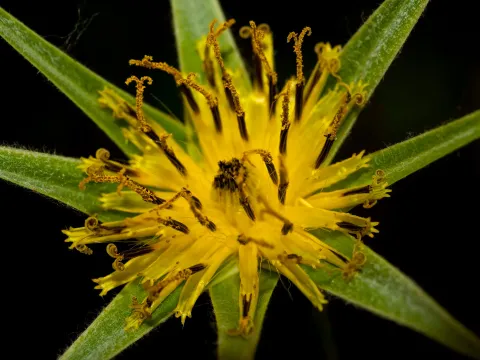
Tragopogon miscellus
Tragopogon miscellus
Tragopogon miscellus, commonly known as a hybrid goatsbeard, belongs to the Asteraceae family. This species is an allotetraploid hybrid, a classic example of speciation resulting from the cross between Tragopogon pratensis and Tragopogon porrifolius.
What the section contains
Tragopogon miscellus
Sowing should take place in early spring once the soil temperature is consistently above 5°C. The seeds germinate well if the soil is properly prepared, requiring a fine tilth and adequate moisture to ensure rapid and uniform emergence.
Placement of seeds should be at a depth of approximately 1.5 to 2 centimeters. Firming the soil after sowing is essential to maintain capillary moisture access for the germinating seeds, which is vital for the crop's establishment in dry spring conditions.
The recommended row spacing is between 30 and 45 centimeters. This distance provides sufficient space for the plant's rosette of leaves and the development of a long, fleshy taproot, while also facilitating mechanical or manual weeding in the early growth stages.
Late autumn sowing is also a viable strategy in temperate regions. Under these conditions, the seeds undergo natural winter stratification, leading to early germination as soon as the ground warms up, which often yields more vigorous plants.
The crop thrives in temperate climates and is well-adapted to regions with distinct seasons. It performs best in open, sunny locations as it is a photophilous plant that requires high light intensity for optimal biomass production.
Soil quality is paramount for root development. Loose, sandy loam or well-drained silt soils are ideal, as they allow the taproot to grow long and straight without encountering physical barriers that cause branching or deformity.
Moisture requirements are highest during the vegetative growth phase. However, the crop is relatively drought-tolerant once established, though prolonged water stress will negatively impact root size and increase the risk of premature bolting.
Regarding soil fertility, excessive nitrogen levels should be avoided to prevent overgrowth of foliage at the expense of root storage. Potassium and phosphorus are the preferred nutrients to promote root quality and overall plant resilience.
Soil pH should ideally be in the neutral to slightly alkaline range. Maintaining good soil structure and aeration is critical, as the crop is sensitive to anaerobic conditions often found in heavy, compacted, or waterlogged clay soils.
The yield of Tragopogon miscellus is significantly influenced by soil texture and effective weed control. Under favorable management practices, commercial yields can reach 15 to 20 tons per hectare, depending on the plant density and climatic factors.
Growth is relatively slow in the first few weeks, necessitating careful attention to field hygiene. Once the rosette is fully developed, the plant puts most of its energy into the development of the root, which thickens significantly throughout the summer months.
The roots are the primary product of interest, valued for their culinary properties. They are often compared to oyster plant or salsify, offering a distinct flavor profile that makes them a niche but valuable product for local food markets.
Post-harvest management involves careful cleaning to preserve the integrity of the root surface. Damaged skin allows for easy entry of storage pathogens, so gentle handling during harvesting and sorting is crucial for long-term storage success.
Future research may focus on selecting genotypes with more uniform root shapes. Even at current levels, the species offers a stable harvest for small-scale farmers and those interested in diverse, climate-resilient root vegetable options.
Wireworms represent the primary pest threat to this crop. These larvae burrow into the roots, leaving visible tunnels that reduce the root's quality and market value, and often create entry points for soil-borne diseases.
Powdery mildew is the most common fungal disease, occurring particularly in late summer during periods of high humidity and temperature fluctuations. It affects the foliage, reducing photosynthesis and ultimately stunting root development.
Root rot, often associated with Fusarium species, can develop in poorly drained soils. Improving soil drainage and practicing consistent crop rotation are the best preventative measures against these destructive soil pathogens.
Aphids can infest young rosettes during dry spells. While they rarely kill the plant, they can weaken it and transmit viral diseases, requiring monitoring and timely intervention if infestation levels become economically significant.
Leaf rust may appear in stagnant, humid environments. Management strategies include ensuring adequate spacing between plants to promote airflow and removing any infected leaves to prevent the spores from spreading through the field.
Harvesting typically occurs in the late autumn, after the plant has ceased its main vegetative growth. This ensures that the roots have reached their maximum size and sugar concentration, providing the best flavor and culinary texture.
Garden forks or mechanical diggers are used to lift the roots gently from the ground. Because the roots are long and somewhat brittle, extreme care must be taken during the lifting process to avoid breaking them, which would compromise their shelf life.
Once harvested, the roots should be cleaned and left to dry in a cool, shaded, and well-ventilated area for a day or two. This "curing" process helps minor surface wounds to heal, which is essential for successful storage.
Roots can be stored in cool, humid conditions, such as root cellars or climate-controlled cold storage. When kept at temperatures near 0–2°C with high humidity, the roots can remain fresh and crisp for several months.
Grading is performed based on root length and diameter. High-quality roots are clean, firm, and free from pest damage, making them ready for immediate sale or culinary use in specialty restaurants or retail settings.