
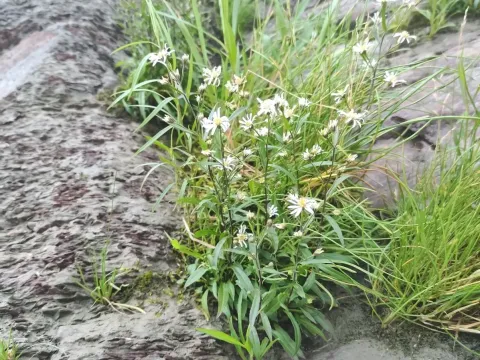
Tradescant's aster
Symphyotrichum tradescantii
Tradescant's aster (Symphyotrichum tradescantii) is a perennial herbaceous plant belonging to the Asteraceae family. Native to eastern North America, it is widely recognized for its robust growth and late-season blooming period.
What the section contains
Tradescant's aster
The plant features slender, highly branched stems that can reach heights of over one meter. Its foliage is lance-shaped and creates a dense, dark green canopy that serves as an excellent structural element in perennial borders.
Flowering occurs in late summer and autumn, producing numerous small, daisy-like flower heads. The colors range from white to pale lavender, attracting various pollinators such as bees and butterflies to the garden late in the year.
This species thrives in full sun but can tolerate partial shade, provided it receives enough light to maintain its upright form. It prefers moisture-retentive, fertile, and well-drained soils, showing good adaptability to different garden conditions.
Hardiness is one of the plant's main strengths, allowing it to survive cold winters without special protection. Given its vigorous growth, it is a low-maintenance choice for gardeners looking for reliable seasonal interest.
Powdery mildew is the most common issue encountered when growing Tradescant's aster, especially in humid or stagnant air environments. This fungal disease appears as a white, powdery coating on the surface of the leaves.
Rust diseases may also affect the plant if drainage is poor or if the foliage remains wet for extended periods. Improving air circulation by providing adequate spacing between individual plants is the most effective preventative strategy.
Spider mites are a significant pest, particularly during hot and dry summer months. They feed on the underside of leaves, causing discoloration and general decline of the plant's overall health and vigor.
Aphids occasionally infest new growth during the spring season, causing potential distortion. Integrated pest management, including regular inspections and the use of insecticidal soaps, is highly recommended.
To ensure long-term health, avoid overhead watering, which exacerbates fungal issues. Keeping the planting site clean by removing debris at the end of the season further reduces the pressure from overwintering pests and pathogens.