
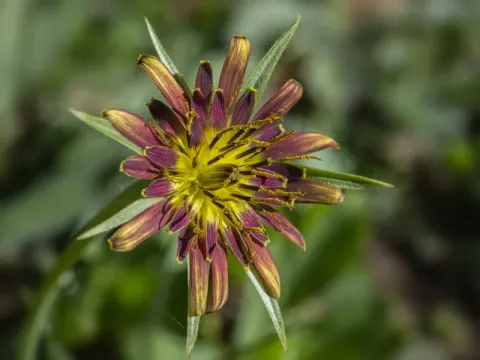
Tragopogon cazorlanus
Tragopogon cazorlanus
Tragopogon cazorlanus is a member of the Asteraceae family. As a biennial crop, it focuses its energy on root development during the first growing season.
What the section contains
Tragopogon cazorlanus
Sowing should take place in early spring once soil temperatures reach 8–10°C. Ensuring early planting allows the plant to establish a deep root system before summer heat.
Seeds are sown in rows at a depth of 2–3 cm. Keeping the seedbed consistently moist is crucial, as the germination process is highly sensitive to water availability.
Spacing between rows should be approximately 30–40 cm. This distance allows for optimal air circulation and simplifies maintenance during the vegetative growth stage.
Thinning out seedlings is necessary once they reach the two-leaf stage. Removing excess plants ensures each root has sufficient space to grow straight and develop properly.
The crop thrives in sunny locations with well-drained, loose, sandy-loam soils. Compacted or heavy soils prevent the root from penetrating deep, causing fork-like deformities.
This plant is naturally adapted to somewhat dry conditions, but regular irrigation during the initial formation of the root system significantly improves overall biomass.
A soil pH between 6.5 and 7.5 is ideal. If the soil is too acidic, liming should be performed well in advance of sowing to facilitate nutrient uptake.
Fertilization with potassium-rich organic matter enhances root quality and sugar accumulation, whereas excessive nitrogen leads to rampant foliage growth at the root's expense.
Effective drainage is non-negotiable. Stagnant water around the taproot quickly leads to rot and fungal development, which can destroy the entire harvest potential.
Yield potential depends heavily on soil preparation and precise weed management, as Tragopogon cazorlanus competes poorly with fast-growing weeds early on.
Under optimal management, healthy plants produce uniform, high-quality roots. Regular monitoring of growth stages helps in adjusting irrigation according to local rainfall patterns.
Maximizing yield involves ensuring a full stand of plants. Gaps in the rows result in inefficient land use, making precise seeding rates very important for commercial growers.
Strategic nutrient management, focusing on phosphorus for root development, consistently yields better harvest results in varied soil types.
Root size and texture are key metrics for success. A well-managed crop will result in smooth, firm roots that remain viable for storage for several months.
Wireworms represent a major threat to this crop, as they bore into the roots, rendering them unsightly and prone to secondary infections during storage.
Powdery mildew can appear during warm, humid conditions. Preventive measures include maintaining spacing and avoiding overhead irrigation during midday hours.
Aphids often target the tender young foliage. Regular scouting and, if necessary, the use of biological control agents can mitigate the impact on plant vigor.
Root rot is common in poorly drained fields. Crop rotation is the primary defense strategy, preventing the buildup of pathogens in the soil over time.
Rust diseases on the leaves can reduce the photosynthetic capacity of the plant. Maintaining plant health through proper nutrition is the best way to keep these issues at bay.
Harvesting is typically done in late autumn. The cooler temperatures improve the flavor profile of the root by increasing the concentration of stored sugars.
Manual lifting with a garden fork is recommended to avoid slicing or breaking the roots. Mechanical harvesting is possible but requires specialized equipment to avoid damage.
Once lifted, foliage should be trimmed back to within 1 cm of the crown. Clean, dry roots store significantly better than those left with excessive soil or green matter.
Curing the roots in a shaded, well-ventilated area for a short period before storage helps seal any minor cuts or abrasions incurred during the digging process.
Storage requires high humidity and cool temperatures near freezing. Root cellars or specialized cold storage units are ideal for extending the shelf life through winter.