
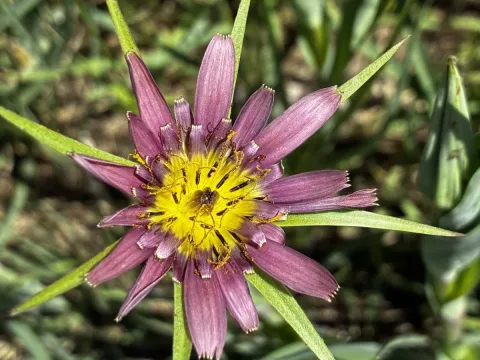
Tragopogon mirus
Tragopogon mirus
Tragopogon mirus, commonly known as a type of goat's-beard, belongs to the Asteraceae family. It is a striking example of a natural allotetraploid, resulting from the hybridization of two distinct species found in North America.
What the section contains
Tragopogon mirus
The plant thrives in well-drained, nutrient-rich soils with a neutral pH. It is an heliophilic plant, requiring full sun exposure to successfully complete its reproductive cycle and produce vibrant flowers.
Regarding climate, it is remarkably hardy and well-adapted to environments where precipitation is somewhat variable. However, it cannot tolerate waterlogged conditions, which lead to rapid root decay.
Agricultural management is focused on maintaining weed-free rows during the seedling stage. Once established, the plant shows significant resilience to environmental stressors like moderate drought.
Its primary value lies in its role within plant biology research, specifically regarding polyploidy and evolutionary genetics, although it is occasionally utilized in ornamental landscape gardening.
Rust fungi (Puccinia species) are the most significant pathogens affecting Tragopogon mirus. These pathogens form orange-brown pustules on the foliage, which can cause premature senescence.
Powdery mildew represents another serious threat, particularly in dense stands with poor airflow. It covers the leaves with a white, dusty layer, hindering photosynthesis.
Pests such as aphids are frequently observed clustering on tender shoots and buds. Their feeding activity can cause distortion and stunt the development of the inflorescences.
Weevils can also impact the plant by feeding on the base of the stem or the root collar. Integrated pest management strategies, including crop rotation, are essential for mitigation.
Sanitation practices, such as the removal and destruction of infected plant debris after the growing season, are critical to break the lifecycle of soil-borne and residue-harbored pathogens.