
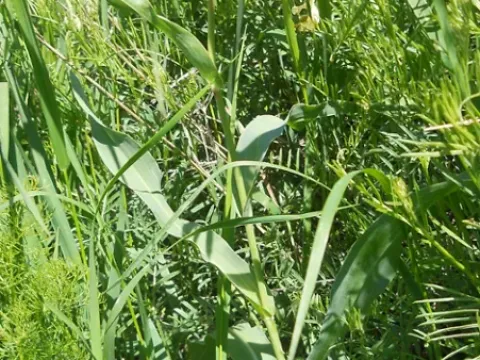
Tragopogon latifolius
Tragopogon latifolius
Tragopogon latifolius, a member of the Asteraceae family, is a root vegetable that thrives when grown from seed. Planting should occur in early spring as soon as the soil can be worked, ensuring the ground is free from significant frost.
What the section contains
Tragopogon latifolius
The seeds are sown directly into the prepared beds, typically at a depth of 1 to 2 centimeters. Ensuring a consistent seedbed density is crucial for healthy root development during the initial growth stages.
Because the plant develops a long taproot, transplanting is highly discouraged as it often leads to malformed or forked roots, which significantly decrease the harvestable yield.
Spacing between rows should be approximately 30 to 45 centimeters, allowing for efficient weeding and soil aeration, which are vital for the plant to reach its full potential.
Regular thinning of the seedlings is necessary once they are large enough to handle, maintaining a distance of at least 15 centimeters between plants to prevent overcrowding.
The crop requires deep, loose, and well-drained loamy soil to allow the taproot to grow straight and uniform. Compacted or stony soils will result in stunted and branched roots.
Optimal growth occurs in sunny locations with full exposure to light. While the plant is quite hardy, insufficient light levels can lead to weak foliage and reduced carbohydrate storage in the roots.
The plant is relatively drought-tolerant once established but needs steady moisture during the primary development phase to ensure high-quality, succulent roots that do not turn woody.
A neutral to slightly alkaline soil pH is preferred. If the soil is excessively acidic, applications of lime are necessary to create a favorable environment for the root system.
Fertilization should be handled carefully; avoiding high-nitrogen synthetic fertilizers is recommended, as these can promote excessive leaf growth at the expense of root mass.
Fungal diseases, such as powdery mildew, often occur in conditions of poor ventilation or high humidity, negatively affecting the overall health and yield of the Tragopogon plantation.
Root rot is another significant concern, particularly in poorly drained soils where water accumulates. This often leads to crop loss if not managed through proper site selection.
Pests like aphids can infest the upper parts of the plant, drawing energy from the foliage. Additionally, subterranean pests may target the taproot, creating entry points for secondary infections.
Effective management involves consistent crop rotation and the prompt removal of crop debris after harvest to prevent the buildup of pathogens in the soil.
- Crop rotation every 3 years
- Monitoring for pest outbreaks
- Adequate spacing for airflow
Harvesting Tragopogon latifolius typically takes place in the late autumn of the first year. The roots are harvested when they have reached their maximum size but before the ground freezes solid.
When digging, it is critical to use garden forks carefully. The roots are brittle, and any snapping or scarring can lead to rapid decay during the post-harvest storage phase.
Once harvested, the foliage is trimmed, leaving a small stem piece. This helps in maintaining moisture within the root and extends the period the vegetable remains fresh.
The roots are known for their delicate, oyster-like flavor. They can be cooked in various ways, serving as a gourmet root vegetable in many traditional culinary practices.
To store, place the cleaned roots in a cool, dark cellar at a temperature near freezing, ideally packed in damp sand to prevent dehydration and maintain crispness for months.