
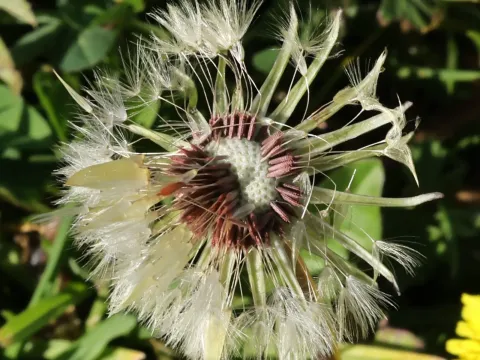
Red-seeded dandelion
Taraxacum erythrospermum
The red-seeded dandelion (Taraxacum erythrospermum) is a member of the Asteraceae family, widely recognized for its robust perennial growth pattern and ecological adaptability.
What the section contains
Red-seeded dandelion
For optimal crop establishment, seeds are typically sown during the autumn months, allowing them to undergo natural stratification, which enhances germination success in early spring.
Spring sowing is also a viable option, provided that soil moisture levels are carefully maintained to prevent the desiccation of the shallow-sown seeds before they emerge.
Seeding is performed in rows spaced 30 to 45 centimeters apart, with a planting depth of approximately 1 to 1.5 centimeters to ensure adequate coverage and protection.
Proper seedbed preparation, including fine-tilth soil and light rolling after sowing, is essential to establish good soil-to-seed contact, which accelerates early development.
This crop thrives in open, sunny locations with direct sunlight exposure, which is critical for the synthesis of secondary metabolites found in its leaves and roots.
The ideal soil profile consists of fertile, well-drained sandy loams or silt loams with a neutral pH, as these textures facilitate efficient root penetration and development.
The plant is highly resilient and displays excellent cold hardiness, allowing it to survive through winter in temperate regions without requiring special protective covers.
While tolerant of minor moisture fluctuations, it is sensitive to waterlogged conditions, which can lead to crown rot and reduced biomass quality during the growing season.
Maintaining soil fertility through the moderate application of organic fertilizers contributes to higher yield and improved plant vigor during the peak vegetative phase.
The red-seeded dandelion is primarily harvested for its culinary foliage and pharmaceutical-grade roots, which are highly valued for their nutritional and medicinal properties.
Typical green biomass yields range between 15 and 25 metric tons per hectare, depending heavily on soil quality, irrigation management, and the density of the planting.
Root harvest occurs predominantly in autumn or early spring, as these periods correspond with the highest concentration of inulin and other vital bioactive compounds in the taproot.
Dry root yield is estimated at 3–5 quintals per hectare, necessitating careful post-harvest management to ensure that the dried product meets industrial quality standards.
Beyond its primary harvests, the dandelion acts as an early-season nectar source, proving essential for supporting local bee populations before other forage crops bloom.
Disease management is primarily focused on controlling fungal pathogens such as powdery mildew and various leaf spot diseases that thrive in humid and poorly ventilated fields.
Common agricultural pests like aphids and spider mites may impact the crop, particularly during dry spells, which necessitates monitoring and timely biological control measures.
Effective weed control during the seedling stage is vital for the survival of the crop, as young dandelions are sensitive to competition from aggressive invasive weeds.
Crop rotation practices should be strictly implemented, with a period of at least three years between dandelion plantings to prevent the accumulation of soil-borne pathogens.
Ensuring proper plant spacing is a fundamental strategy to increase airflow through the canopy, thereby significantly reducing the risk of foliage diseases during rainy weather.
Leaf harvesting for culinary purposes is best performed during the spring, prior to the bolting stage, to ensure that the greens maintain a desirable taste profile without bitterness.
Roots are extracted from the soil using specialized mechanical harvesters that lift the taproots without causing physical damage, which is essential for shelf-life longevity.
Post-harvest processing involves immediate washing to remove soil residues and the removal of damaged portions to maintain the high quality of the raw material.
Drying must be conducted in well-ventilated, shaded facilities, as direct UV exposure can degrade the beneficial compounds and alter the color of the final dry product.
Storage requires a cool, dry, and dark environment to protect the dried crop from moisture and pests, ensuring product integrity for distribution in the pharmaceutical market.