
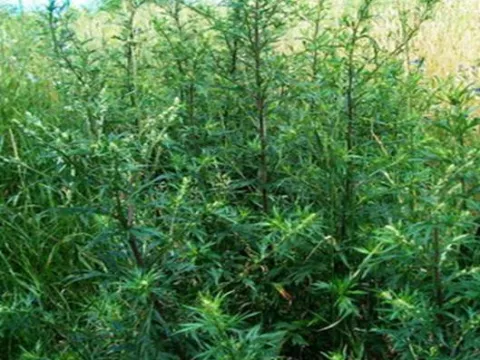
Red-footed mugwort
Artemisia rubripes
Red-footed mugwort (Artemisia rubripes) belongs to the Asteraceae family. Sowing is typically conducted in the spring when soil temperatures reach 10-12 degrees Celsius, providing the necessary warmth for reliable germination.
What the section contains
Red-footed mugwort
In commercial cultivation, farmers may use either direct seeding or transplanting seedlings to ensure uniform plant distribution and density across the field.
Seeds should be sown at a very shallow depth, usually 0.5 to 1 cm, as they require sufficient light to trigger the germination process, followed by light soil compaction.
The spacing for sowing depends on the production goal: wide rows of up to 60 cm are standard for biomass production, allowing for efficient mechanical weeding and maintenance.
Since the seedlings grow relatively slowly at first, ensuring clean fields by removing weeds during the early establishment phase is crucial for the success of the crop.
This plant is highly adaptable but thrives best in open, sunny locations. Exposure to direct sunlight is essential for maximizing the accumulation of secondary metabolites in the foliage.
Artemisia rubripes grows well on various soil types, but it prefers well-drained, sandy loams or loamy soils with a neutral to slightly alkaline pH level.
The species is remarkably drought-tolerant, making it an excellent candidate for cultivation in regions with limited rainfall, as it generally does not require artificial irrigation once established.
Waterlogging is a major risk for this crop, as excessive soil moisture can easily lead to root rot; therefore, selecting fields with deep groundwater levels is highly recommended.
Nutrient requirements are moderate; excessive nitrogen application should be avoided, as it can decrease the essential oil quality and overall concentration of active compounds in the plant.
The total yield of red-footed mugwort depends heavily on management practices and the natural fertility of the soil within the designated cultivation area.
With optimal plant density and timely weeding, average yields of dry biomass range from 15 to 25 centners per hectare, depending on local climate conditions.
The age of the plantation is a key factor, as plants typically focus on root development in the first two years, reaching peak biomass production in the third and fourth years.
Regular harvesting of the green mass stimulates lateral branching and bushy growth, which significantly increases the total volume of raw material collected throughout the growing season.
The timing of the harvest is equally critical, as the peak accumulation of useful bioactive substances occurs specifically during the early flowering phase of the plant.
Red-footed mugwort is known for its strong phytoncide activity, which grants it natural resistance against many common pathogens that affect other agricultural crops.
However, under poor management conditions, such as high humidity and overcrowded planting, the crop may become susceptible to root rot caused by soil-borne fungal pathogens.
Common insect pests include various leaf beetles and aphids, which can damage the foliage and reduce the overall quality and aesthetic value of the harvested medicinal raw material.
Integrated pest management strategies, focusing on biological control methods, are highly recommended to keep the plantation healthy without relying solely on chemical pesticides.
- Crop rotation is essential to prevent the buildup of soil-borne diseases in the planting area.
- Improving soil aeration through regular cultivation between rows helps minimize the risk of fungal infections.
The harvest period usually centers on the mass flowering phase, as this is when the leaves and stems contain the highest concentration of essential oils and flavonoids.
Mechanical harvesting is typically performed at a cutting height of 10-15 cm above the soil, which allows for rapid regeneration and secondary growth of the plant.
Post-harvest, the green material must be dried quickly in shaded, well-ventilated areas or in specialized drying facilities at temperatures not exceeding 45 degrees Celsius.
During the harvest and drying process, care must be taken to prevent contamination with foreign materials, weeds, or soil, which could compromise the final quality of the raw material.
Stored material should be kept in cool, dark, and dry conditions to prevent the degradation of aromatic compounds and ensure a long shelf life for the medicinal crop.