
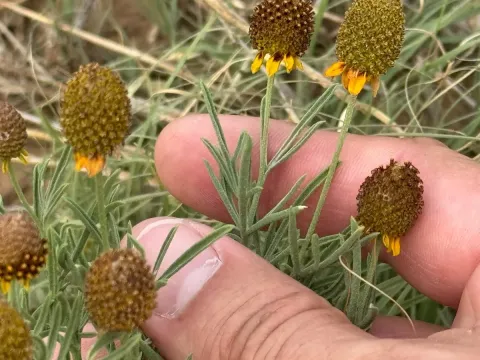
Ratibida tagetes
Ratibida tagetes
Ratibida tagetes, commonly known as the prairie coneflower or Mexican hat, is a perennial flowering plant from the Asteraceae family. It is native to the dry prairies and rocky slopes of North America, making it an ideal choice for low-maintenance landscapes.
What the section contains
Ratibida tagetes
Seeds should be sown in early spring as soon as the soil can be worked. Because the seeds require a period of cold stratification to germinate, fall sowing is often recommended for better results in regions with cold winters.
When starting indoors, sow seeds in late winter in a light, well-draining potting mix. Do not bury the seeds deeply, as they require light to germinate; simply press them onto the surface and keep them moist until germination occurs.
Seedlings emerge within 14 to 21 days when kept at a temperature of around 20 degrees Celsius. Once they reach a size that is easy to handle, they should be transplanted into individual pots to develop a robust root system.
Transplanting into the permanent site should take place after the last spring frost. Spacing the plants 30 to 45 centimeters apart is essential to allow for adequate air circulation and prevent crowding as the plants reach maturity.
Ratibida tagetes is a full-sun plant. It requires at least 6 to 8 hours of direct sunlight daily to produce its signature cone-shaped flowers and maintain a healthy, compact growth habit.
This species is well-adapted to poor, rocky, and sandy soils. It thrives in well-draining conditions and will struggle in heavy clay or waterlogged soils, which significantly increase the risk of root pathogens.
Once established, the plant is exceptionally drought-tolerant. During the first growing season, regular watering is recommended to help the root system develop; afterwards, it can handle extended periods of dryness with ease.
Fertilization is rarely necessary for this plant. Over-fertilizing, especially with nitrogen-rich products, often results in excessive foliage growth and may actually reduce the plant's ability to bloom effectively.
Maintenance is minimal, consisting mainly of removing spent flower stalks in late fall to tidy up the plant's appearance, although leaving them through winter provides interest and seeds for local birds.
Root rot is the primary threat to Ratibida tagetes, almost exclusively caused by poor drainage or excessive soil moisture. Choosing a site that slopes slightly or has a sandy texture is the best prevention strategy.
Leaf spot fungi can occasionally develop during prolonged periods of high humidity. To manage this, ensure the planting area has good airflow and avoid overhead watering that keeps the foliage wet for extended hours.
Pests like aphids may target tender new growth during stress. However, as a hardy native species, it usually survives minor infestations without intervention. Using a simple spray of water is typically sufficient to dislodge any pests.
Powdery mildew is a potential issue if plants are crowded together in areas with poor ventilation. Thinning out the plants or ensuring enough space between them at the time of planting is the best cultural control.
Overall, Ratibida tagetes is highly resilient and disease-resistant. It serves as a perfect example of a sustainable ornamental plant that requires little to no chemical intervention to stay healthy and productive.