
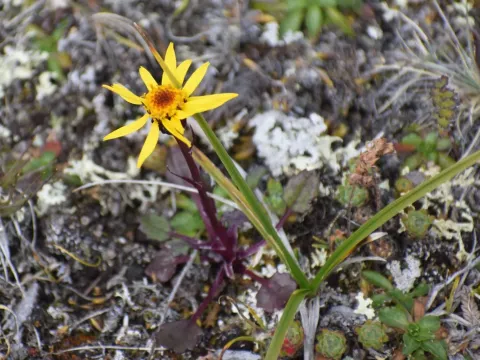
Reseda-leaved groundsel
Senecio resedifolius
Senecio resedifolius, known as the reseda-leaved groundsel, is a perennial herb belonging to the Asteraceae family. It is primarily distributed across the arctic and alpine regions of the Northern Hemisphere, showing remarkable adaptation to harsh environments.
What the section contains
Reseda-leaved groundsel
The species thrives in well-drained, rocky habitats, including mountain slopes, limestone screes, and river gravel beds. It requires high light intensity and is intolerant of stagnant water, which can quickly lead to root rot.
Climate requirements for this plant include tolerance to extreme temperature fluctuations and short growing seasons. It is perfectly adapted to the cold, windy, and nutrient-poor substrates found in mountain and tundra ecosystems.
Botanical characteristics include a rosette of basal leaves that resemble the foliage of Reseda plants, topped by a stem featuring solitary or few-flowered composite inflorescences with yellow florets.
While not a major agricultural crop, it is of interest in botany and alpine gardening. The presence of specific alkaloids and its specialized ecological niche limit its use to non-food applications and scientific study.
Environmental disruption, such as soil compaction or vegetation layer damage, poses the most significant threat to the survival of the reseda-leaved groundsel in its native habitat.
Fungal pathogens associated with high soil moisture are a major threat, particularly when the plant is exposed to humid conditions that deviate from its natural, well-drained arctic-alpine environment.
Pests typical of high-altitude flora may feed on the foliage, but they rarely reach infestation levels that would endanger the survival of an entire population under natural conditions.
Cultivation risks include over-fertilization, which encourages succulent growth susceptible to pathogens, and the use of substrates that fail to provide the necessary aeration for the root system.
Management and preservation strategies focus on maintaining the integrity of the soil structure and providing a growth environment that mimics the specific drainage and nutrient properties of its endemic range.