
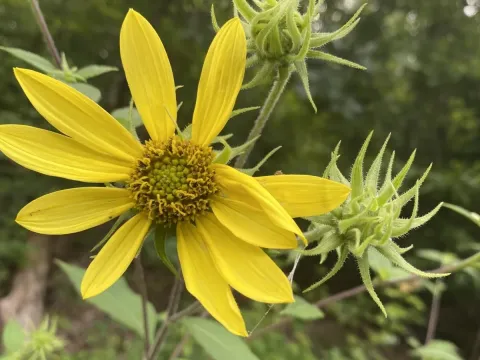
Resinous sunflower
Helianthus resinosus
Resinous sunflower (Helianthus resinosus) is a hardy perennial herbaceous plant belonging to the Asteraceae family. Unlike annual oilseed sunflowers, this species is characterized by its rhizomatous root system, which allows it to persist and spread effectively over several growing seasons.
What the section contains
Resinous sunflower
The plant is distinguished by its unique resinous, sticky texture on the stems and leaves, an evolutionary adaptation that helps in water retention. It can reach considerable heights, often growing over two meters, and produces vibrant yellow flower heads during the late summer and autumn months.
This species thrives in deep, fertile soils ranging from loamy to sandy textures. It requires full sun exposure for optimal biomass production and is notably resilient to various environmental stressors, including periods of moderate drought once established.
Helianthus resinosus is highly valued for its winter hardiness, surviving cold winters in temperate zones without requiring annual replanting. It is an excellent candidate for marginal land use and sustainable agriculture projects aimed at high-volume biomass production.
Agricultural use is diverse, ranging from silage production for livestock to its potential as a sustainable biofuel feedstock. Its late-blooming flowers also make it a significant asset for late-season apiculture, providing nectar when other sources are scarce.
The crop is occasionally susceptible to standard sunflower pests, such as aphids and sunflower beetles. Monitoring programs should focus on identifying early infestations on terminal shoots, where these insects frequently aggregate during the peak growth phase.
Fungal diseases like powdery mildew can impact foliage, particularly in areas with poor airflow or high humidity. Promoting adequate spacing during the initial planting stages is crucial to ensure good ventilation and reduce the risk of disease spread within the stand.
Weed management is most critical during the first year of establishment. Because the plant starts slowly, implementing mechanical cultivation or mulching between rows is recommended to minimize competition until the perennial root system is fully developed.
Sanitation practices play a vital role in maintaining the long-term health of the crop. Removing infected plant materials and debris at the end of the season significantly reduces the inoculum potential for the following year, ensuring sustainable yields.
Farmers should also be cautious of root rot, which may occur in waterlogged soils. Proper site selection focusing on well-drained locations is the most effective biological control against most soil-borne pathogens associated with the Resinous sunflower.