
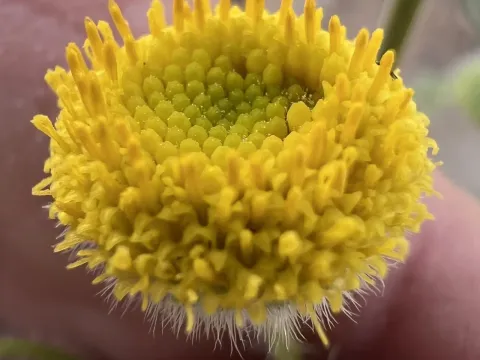
Rayless fleabane
Erigeron aphanactis
Rayless fleabane (Erigeron aphanactis) is a perennial herbaceous plant belonging to the Asteraceae family. While not a conventional crop, its unique biological traits make it an interesting subject for botanical research and specialized horticulture.
What the section contains
Rayless fleabane
Propagation is primarily achieved through seeds. In its native habitat, the plant relies on natural winter chilling to break seed dormancy, which indicates that sowing should ideally take place in the autumn for best results.
Seeds are extremely small and should be sown on the surface of the soil or covered with a very thin layer of vermiculite. Ensuring a firm bond between the seed and the soil moisture is crucial for successful germination in early spring.
When starting in a controlled environment, such as a greenhouse, seeds typically germinate within 14 to 21 days under consistent temperature conditions ranging from 15 to 20 degrees Celsius.
Once seedlings have developed their first true leaves, they should be transplanted into well-draining soil mixtures to prevent damping-off. Proper spacing is required to allow for adequate airflow around the basal rosettes.
Native to western North America, rayless fleabane thrives in arid and semi-arid environments. It is highly adapted to rocky slopes and dry, sandy soils where nutrient availability is low but drainage is excellent.
The plant requires full sun to maintain its compact growth form. When grown in partial shade, the stems tend to become elongated, losing their natural structural integrity and resilience to wind.
Soil pH levels should be neutral or slightly alkaline. The plant is notably tolerant of drought conditions, but it is extremely sensitive to waterlogged environments, which quickly lead to root degradation.
Fertilization is rarely necessary for this species. In fact, excessive nitrogen promotes leafy growth that is more susceptible to environmental stressors and may reduce the plant's natural longevity.
Winter hardiness is one of the key features of this species. It has evolved to withstand freezing temperatures, provided the soil drainage remains effective throughout the wet winter months.
The primary threats to the cultivation of Erigeron aphanactis are pathogenic organisms associated with high moisture. Proper site selection and soil management are the most effective preventive strategies.
While relatively pest-resistant, aphids can occasionally infest the plant during the active growing season. Managing these pests early is essential to prevent stunted growth and potential viral transmission.
- Root rot: Caused by poor drainage or excessive irrigation.
- Powdery mildew: Often a consequence of high humidity and poor air circulation.
- Aphids: Can appear during drought-induced stress periods.
Good cultural practices, such as maintaining weed-free plots and avoiding overhead irrigation, are essential. These steps help maintain the health of the plant throughout its lifecycle.
In cases of significant infestation, gardeners should prioritize biological control agents or mechanical removal over chemical intervention to preserve the delicate ecosystem surrounding the plant.