
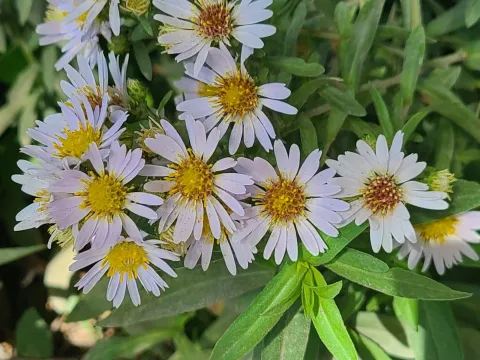
Chilean aster
Symphyotrichum chilense
Propagation of the Chilean aster can be successfully achieved through seed germination or, more efficiently, by rhizome division in early spring.
What the section contains
Chilean aster
Seeds require a cold stratification period of at least 30 to 60 days to break dormancy and ensure uniform emergence of young seedlings.
When sowing, provide a well-draining seed-starting mix and cover seeds lightly with soil, as they need a minimal amount of light to trigger germination.
Division of mature clumps should be performed every three to four years to maintain the vigor and health of the plant population.
Ensure that seedlings are spaced at least 50 centimeters apart to prevent overcrowding and allow for adequate growth of the root system.
Symphyotrichum chilense belongs to the Asteraceae family and is native to the western regions of North America, favoring temperate climate zones.
The plant thrives in full sun exposure and requires well-drained soil to prevent root rot, which is a common issue in heavy clay environments.
While the species is relatively drought-tolerant once established, it responds best to consistent moisture during the peak summer growing season.
Soil pH should ideally be neutral or slightly alkaline, with sufficient organic matter to provide nutrients for the long-lasting flowering period.
The plant is hardy and typically survives moderate winter frosts, making it a reliable perennial choice for landscaping and habitat restoration projects.
Powdery mildew is the most frequent pathological threat to this species, usually occurring when airflow is restricted in high-density plantings.
Aphids are common pests that feed on the soft, succulent growth of the stems, leading to stunted development and potential transmission of viral diseases.
To minimize pest impact, maintain clean culture practices by removing all debris from the garden floor during the late autumn dormancy period.
Leaf spots caused by fungal pathogens can appear during periods of high humidity and should be managed with appropriate organic fungicides.
Monitoring the undersides of leaves during the spring is crucial for identifying early infestations of spider mites before they cause widespread leaf damage.