
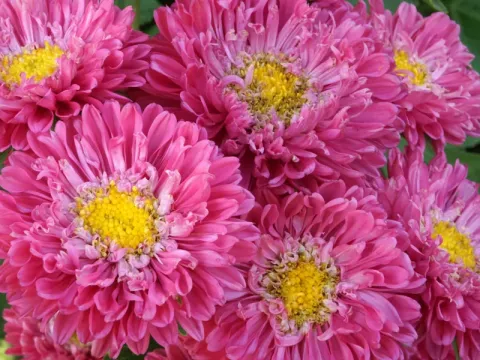
China aster
Callistephus Cass.
China aster (Callistephus chinensis) is an annual plant belonging to the Asteraceae family. It is typically propagated by seeds, which can be started indoors or sown directly in the field after the danger of frost has passed.
What the section contains

China aster
For indoor propagation, seeds are sown in seed trays during late winter or early spring, maintaining a consistent temperature of around 18–20 degrees Celsius for optimal germination.
When sowing outdoors, it is essential to wait for the soil to warm up. Seeds should be covered with a thin layer of soil and kept moist until the emergence of seedlings, which usually takes about 10–14 days.
Transplanting seedlings to their final location requires careful handling of the root system to prevent transplant shock, which can delay growth and flowering.
Providing sufficient spacing between plants is crucial for adequate air circulation, which helps in preventing various fungal diseases common to the species.
China asters thrive in full sun and prefer well-drained, fertile, loamy soils with a neutral pH. Excessive moisture and heavy clay soils are detrimental to their development.
The plant is sensitive to soil-borne pathogens; therefore, crop rotation is mandatory. Planting asters in the same location should be avoided for several years.
Adequate water supply is necessary, especially during the bud formation and flowering stages, but water must be applied to the soil rather than the foliage to prevent disease.
Regular fertilization with balanced fertilizers, focusing on phosphorus and potassium, encourages stronger stems and more vibrant, long-lasting flowers.
Weeding should be performed carefully to avoid damaging the shallow root system of the plants, which could otherwise weaken the overall plant vitality.
Fusarium wilt is the most serious disease affecting China asters, leading to stunted growth, yellowing leaves, and eventual plant death due to vascular blockage.
Verticillium wilt is another significant soil-borne fungal threat, causing localized wilting and necrosis that spreads rapidly through the plant's vascular tissue.
Insects like aphids and spider mites act as vectors for various plant viruses, which often manifest as malformed flowers or distorted, chlorotic leaves.
Control strategies involve using resistant cultivars, implementing strict sanitation practices, and employing integrated pest management techniques to reduce chemical usage.
Regular inspections of the planting area help in the early detection of issues, allowing for timely intervention and minimizing potential crop losses.
Harvesting flowers for cut-flower production is best done in the early morning when the plants are fully turgid and have the highest moisture content.
Depending on the variety and market demand, flowers are cut at different stages, ranging from partially opened buds to fully matured blooms for immediate use.
For seed production, select the healthiest plants with desirable traits and leave the flower heads on the plant until they become dry and brown.
Seeds are extracted from the dried heads and cleaned of all debris, then stored in a cool, dry environment to maintain their viability for the next season.
Proper post-harvest handling includes immediately placing cut stems into clean water and keeping them in a cool environment to extend their vase life significantly.