
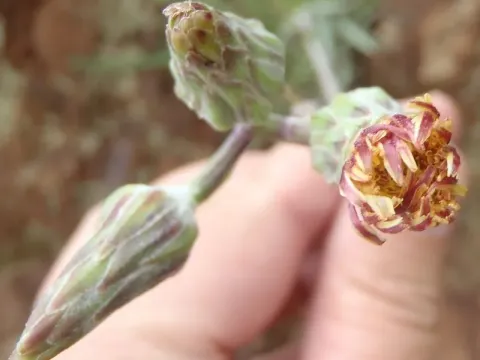
Sonchus dregeanus
Sonchus dregeanus
Sonchus dregeanus is a perennial plant belonging to the Asteraceae family, native to the diverse landscapes of Southern Africa.
What the section contains
Sonchus dregeanus
Successful cultivation begins with sowing seeds in well-prepared, friable soil during the onset of the favorable growing season.
Precision sowing is essential for this species, with an ideal seed depth of 1 to 2 centimeters to ensure effective germination.
Seedbed preparation should focus on removing competitive weeds and creating a uniform soil surface to allow for consistent seedling emergence.
Field row spacing is typically maintained at 40 centimeters to facilitate mechanical weed control and ensure optimal aeration between plants.
The plant demonstrates a preference for well-drained loamy soils, although it shows a remarkable ability to adapt to varying soil fertility levels.
Optimal growth requires a sunny location, as Sonchus dregeanus responds positively to high light intensity, which supports its biomass production.
While the plant is known for its moderate drought tolerance, adequate moisture during the early vegetative stages significantly improves the yield.
The preferred climate is temperate, with temperatures ranging between 18 and 26 degrees Celsius, promoting robust physiological activity.
Soil pH should ideally remain within the 6.0 to 7.5 range to ensure the bioavailability of micronutrients necessary for healthy leaf development.
The primary agricultural threats to this crop involve fungal infections, particularly those triggered by poor ventilation and excessive surface humidity.
Powdery mildew often manifests on the foliage, necessitating the use of targeted fungicides or improved planting density to increase air circulation.
Pests such as aphids and leaf miners are common, often clustering on the tender younger leaves, which can stunt the growth of the plant.
Root rot remains a concern in areas with inadequate soil drainage, emphasizing the need for selecting sites with proper water management capabilities.
Integrated pest management, including regular crop scouting and the removal of infected plants, is vital to prevent widespread field infestations.
Harvesting Sonchus dregeanus is optimally performed during the pre-flowering stage to maximize the nutritional value of the harvested material.
Mechanical harvesting tools should be set to a height that allows the plant to regenerate effectively from the remaining basal tissues.
Post-harvest handling is critical, requiring prompt drying of the biomass to prevent quality degradation and potential loss from molding.
Yield management depends on the frequency of cutting, which can be optimized based on local climate data and the plant's recovery rate after harvesting.
Efficient storage facilities must be utilized to maintain the integrity of the collected material until it is processed or utilized for its intended purpose.