
Sonchus megalocarpus
Sonchus megalocarpus
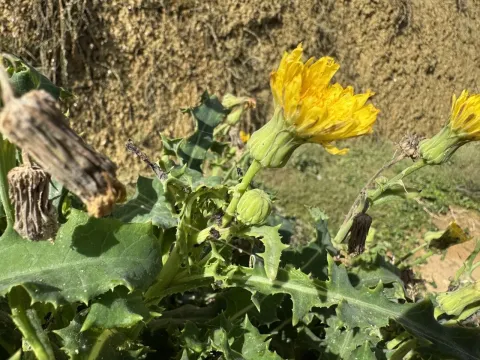
Sonchus megalocarpus is a perennial herbaceous plant belonging to the Asteraceae family. Originating from the coastal regions of Australia, this species is noted for its resilience and ability to thrive in sandy, saline, or nutritionally poor soils, where many other agricultural plants struggle to establish.
What the section contains
Sonchus megalocarpus
The plant requires full sun exposure to maintain optimal physiological processes. It is highly heat-tolerant, performing best in temperatures ranging from 20 to 30 degrees Celsius. Consistent moisture is beneficial during the early establishment phase, although the plant displays significant drought-tolerant characteristics once the root system is fully developed.
In terms of soil requirements, Sonchus megalocarpus prefers well-drained, sandy or light loam substrates. Proper soil aeration is essential, as the roots are sensitive to waterlogging. When cultivated as a field crop, it benefits from moderate nitrogen fertilization, which helps promote biomass production and foliage density.
Botanically, the plant features robust, erect stems and characteristic pinnately lobed leaves. Its extensive taproot system allows it to reach deep into the soil profile for water and nutrients, which contributes to its reputation as a stabilizing agent for loose or degraded soils in arid environments.
The primary economic use of this plant revolves around soil stabilization and biomass potential. Research suggests that it can serve as a beneficial cover crop in specific environments, contributing to organic matter accumulation without requiring intensive chemical inputs, thus supporting sustainable agricultural practices.
The main pests affecting Sonchus megalocarpus include aphid populations, which may infest the leaves during the warmer months. These pests can significantly reduce plant vigor if not controlled through integrated pest management strategies, such as the introduction of beneficial predatory insects.
Fungal issues, particularly powdery mildew and root rot, can arise if the field environment has poor drainage or inadequate air movement. Management practices should prioritize maintaining appropriate plant spacing to ensure sufficient airflow and preventing excess humidity within the crop canopy to minimize pathogen development.