
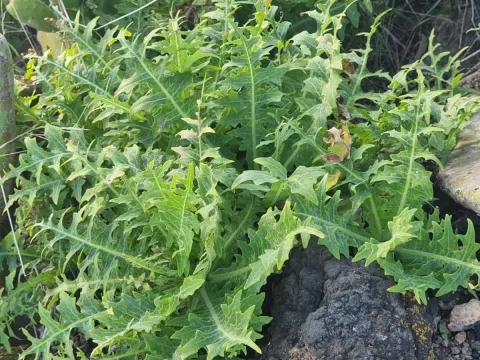
Sonchus ustulatus
Sonchus ustulatus
Sonchus ustulatus belongs to the Asteraceae family. While often considered a wild species, its biomass potential makes it a subject of interest for specialized agricultural research and potential forage use in specific climate zones.
What the section contains
Sonchus ustulatus
The sowing season typically begins in early spring, once the soil has warmed sufficiently to support germination. Consistent soil contact is essential for uniform emergence, especially given the relatively small size of the seeds.
Spacing between rows should be maintained at 30 to 45 centimeters to ensure adequate ventilation and access for weed control measures. Proper seeding density prevents resource competition and allows each plant to reach its full vegetative potential.
Seeds should be sown at a shallow depth of 1 to 2 centimeters. Over-burial significantly reduces emergence rates, as the seeds have limited energy reserves for sprouting from deeper soil layers.
After seeding, light rolling is recommended to improve capillary moisture movement, which is critical for the initial establishment phase. As the crop develops, it forms a rosette that acts as a strong base for future stem development.
This crop thrives in open, sunny environments with well-drained, sandy or loamy soils. It demonstrates remarkable adaptability to arid conditions, making it a resilient choice for regions with limited irrigation resources.
Soil structure is critical; the plant performs poorly in heavy, waterlogged, or overly compacted soils. An ideal pH level for the growth of Sonchus ustulatus is between 6.0 and 7.5, which supports nutrient availability.
Full sun exposure is a requirement for optimal photosynthesis and biomass accumulation. Shaded conditions lead to etiolated stems and a significant decrease in the overall quality of the harvested material.
Management practices should include regular cultivation between rows to prevent crust formation, which can restrict root oxygenation. Fertilization with moderate nitrogen levels during the vegetative stage promotes faster canopy closure.
The species is essentially a xerophyte in its natural habit. While it does not require frequent irrigation, supplementary watering during extreme heatwaves can significantly boost yields if the crop is being cultivated for economic output.
Powdery mildew is the primary fungal threat to the crop, particularly in environments with high humidity and poor air circulation. Proper planting density and spacing are effective preventative measures against such outbreaks.
Aphid infestations represent a common pest risk during the active growing season. These insects feed on succulent tissues and can reduce the vigor of the plants; biological controls are often preferred to maintain ecological balance.
Root rot occurs primarily due to poor soil drainage or over-irrigation. Ensuring that the site is well-drained before planting is the most effective way to prevent these soil-borne pathogen issues from taking hold.
Leaf-mining insects may cause damage to the foliage, which reduces the plant's capacity for photosynthesis. Monitoring the undersides of leaves and removing heavily infested materials can help maintain crop health throughout the season.
- Maintain proper row spacing for better air circulation.
- Implement a strict crop rotation schedule to break pathogen cycles.
- Monitor for insect pests during the early development phase.