
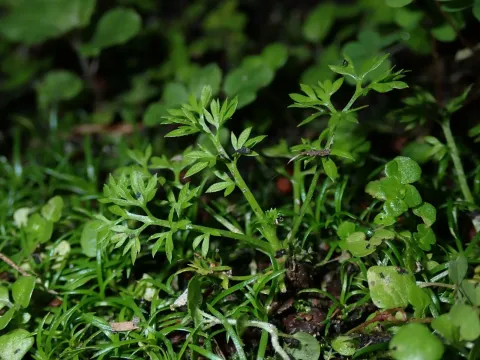
Soliva valdiviana
Soliva valdiviana
Soliva valdiviana is an annual herb within the Asteraceae family, often recognized as a problematic weed in agricultural landscapes and managed turf areas.
What the section contains
Soliva valdiviana
Originating from South America, specifically Chile and Argentina, this species has successfully colonized various continents, establishing itself in temperate and subtropical climates.
The plant thrives in open, sunny locations with well-drained soils, often colonizing disturbed ground where competition for nutrients and sunlight is low.
Botanically, it forms a low-growing rosette with finely divided leaves, an adaptation that allows it to persist in heavily grazed pastures or frequently mown fields.
Its life cycle is closely tied to seasonal moisture, with rapid germination occurring during cool, damp weather to ensure seed maturation before the onset of summer heat.
The primary concern regarding this species is the production of spiny fruit segments that can cause injury to humans and livestock upon contact.
In pastoral settings, these burs adhere to animal fleeces, significantly degrading wool quality and causing discomfort to sheep, which impacts animal productivity.
As a highly competitive weed, it can quickly dominate pastures, outcompeting beneficial forage species and reducing the overall carrying capacity of the land.
Pests and diseases that target Soliva valdiviana are generally insufficient to curb its spread, as it lacks aggressive natural predators in its introduced range.
Effective management strategies focus on selective herbicide applications during the vegetative phase and preventative measures to halt seed production before maturity.