
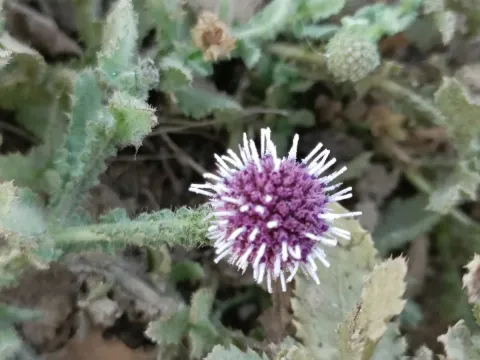
Sphaeranthus
Sphaeranthus
Sphaeranthus, a genus belonging to the Asteraceae family, requires specific conditions for successful establishment. Seeds should be sown into a moist, well-prepared substrate, ensuring proper spacing between individual plants.
What the section contains

Sphaeranthus
Optimal germination occurs at stable temperatures between 22 and 25 degrees Celsius. Sphaeranthus seeds are light-dependent for germination, so they should be sown on the surface or covered only very lightly with soil.
The best time for sowing in temperate zones is spring, once the threat of night frost has passed, as cold snaps can severely stunt the development of young, tender seedlings.
In regions with distinct rainy seasons, cultivation often aligns with the onset of rain, as high moisture levels serve as a natural trigger for the plant's biological cycles.
Preparation of the field must prioritize weed control, as Sphaeranthus grows slowly in its initial stages and is easily outcompeted by more aggressive field weeds.
Sphaeranthus is a moisture-loving crop that thrives in areas with high water availability. It is often found in naturally damp or flood-prone areas, necessitating consistent irrigation in commercial agricultural settings.
The ideal soil profile consists of fertile loams with a near-neutral pH level. Incorporating organic matter improves the soil's structure and its capacity to maintain the consistent hydration required by this plant.
Full sun exposure is crucial for the development of Sphaeranthus. While it grows in damp areas, it must have clear access to light to maximize the accumulation of its therapeutic bioactive compounds.
An ambient temperature range of 20 to 30 degrees Celsius supports optimal growth. Extreme deviations can induce stress, which may prematurely trigger the flowering phase, reducing total biomass yield.
Regular maintenance, including shallow cultivation between rows, helps maintain soil aeration and promotes healthy root development, which is essential for uniform crop performance.
The yield of Sphaeranthus is heavily dependent on moisture management and the timing of the harvest. With appropriate care, growers can achieve multiple cuttings within a single long growing season.
Harvesting for medicinal purposes occurs during the peak flowering phase. This is when the plant's secondary metabolites, particularly its essential oils and flavonoids, reach their highest concentration levels.
Commercial yields typically range from 2 to 5 tons of dried material per hectare, depending on planting density and the efficiency of the nutrient management program employed.
Profitability is tied to the efficiency of the drying process, as improper drying can degrade the quality of the raw material, rendering it unsuitable for high-grade pharmaceutical applications.
Consistent monitoring of plant health and nutrient supply throughout the season ensures that the final biomass quality meets industry standards for medicinal raw materials.
Fungal infections, particularly root rot, represent the most significant threat to Sphaeranthus crops. These issues are almost always linked to poor drainage and soil saturation, making site selection critical.
Pests like aphids and spider mites can infest the foliage, particularly during drier intervals. Biological control methods and targeted application of organic insecticides are recommended to preserve the crop's medicinal purity.
Powdery mildew can become problematic in high-humidity environments with poor air circulation, necessitating strategic spacing between rows to promote healthy airflow within the canopy.
Nematode infestations can destroy the root systems, particularly in sandy soil types. Implementing crop rotation with non-host species is an essential preventive measure for large-scale production.
Weed interference remains a major threat throughout the vegetative stage, requiring consistent mechanical intervention until the plants are large enough to shade out competing weeds.
Harvesting is best performed using mechanical mowers. The cutting height should be carefully calibrated—usually 10 to 15 centimeters above the ground—to allow for potential regrowth of the plants.
The ideal time for harvesting is mid-morning, after the dew has evaporated but before the heat of the day reaches its peak, which helps retain volatile compounds within the plant tissues.
Raw material must be processed immediately after harvesting. Delaying the transport to drying facilities can result in the material heating up due to respiration, which degrades its chemical quality.
Initial processing involves cleaning the biomass of debris and soil. Only clean, high-quality botanical material should be moved to the drying stage to ensure compliance with pharmaceutical requirements.
Dried product should be stored in cool, dark, and well-ventilated conditions to prevent moisture absorption and ensure a long shelf life for the harvested biomass.