
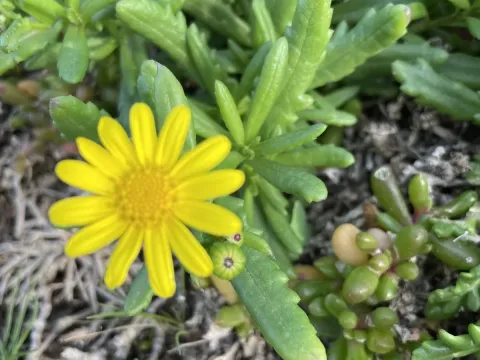
Spoon-leaved groundsel
Senecio spathulatus
Spoon-leaved groundsel (Senecio spathulatus) is a perennial herbaceous plant belonging to the Asteraceae family. Native to parts of Australia, this species has evolved in arid environments, developing unique physiological traits to thrive in heat.
What the section contains
Spoon-leaved groundsel
The plant features distinctively shaped, fleshy, spoon-like leaves that act as water storage organs. This succulent nature allows it to withstand prolonged dry spells, making it an interesting subject for drought-tolerant horticulture.
For successful growth, it requires well-drained, sandy, or rocky soil with a neutral pH. The soil structure must be porous enough to allow excess water to drain away rapidly, preventing the moisture saturation that causes root damage.
Exposure to full sunlight is essential for this species. In lower light levels, the plant loses its structural integrity, developing leggy stems and losing the vibrant coloration typical of its healthy succulent foliage.
The climate requirements focus on warmth and consistent aeration. While it prefers steady temperatures, it can tolerate fluctuations but should be protected from hard frosts, which can rupture the cell walls of the succulent stems.
The most common threat to this species is root rot caused by stagnant water or overly dense soil media. Maintaining a balance between hydration and aeration is critical for long-term survival in an agricultural setting.
Pests such as mealybugs and spider mites are frequent invaders of succulent crops. These insects thrive in confined, poorly ventilated spaces, targeting the tender growth points and soft leaf tissues of the plant.
Good cultural hygiene is the best defense against pathogens. Keeping the foliage dry and ensuring adequate spacing between plants significantly reduces the risk of fungal infections such as powdery mildew or rust.
In case of pest infestation, horticultural oils or insecticidal soaps can be used as a targeted remedy. Systemic chemicals should be applied with caution, ensuring that the plant is not in a stressed state during application.
Monitoring the undersides of the leaves is a key scouting practice for growers. Early detection of colonies allows for manual removal or localized treatment, preventing the need for broad-spectrum pesticide applications.