
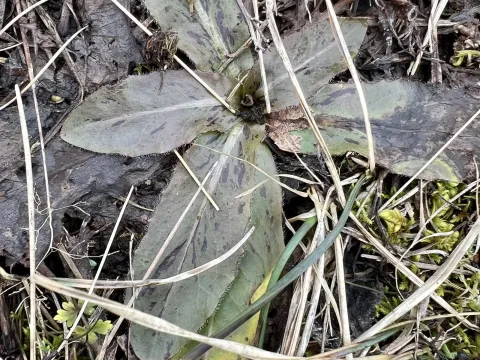
Spotted catsear
Hypochaeris maculata
Spotted catsear (Hypochaeris maculata) is a perennial herbaceous plant belonging to the Asteraceae family. Native to the grasslands and meadows of Eurasia, it is known for its distinctive dark spots on the basal leaves, from which its common name is derived.
What the section contains
Spotted catsear
The plant thrives in well-lit environments and is frequently found in semi-natural grasslands and woodland edges. It prefers well-drained soils and demonstrates excellent adaptability to various temperate climatic conditions, surviving cold winters through its deep root structure.
Botanically, the plant develops a sturdy, mostly leafless stem that can reach heights of up to 80 cm. The golden-yellow flower heads are similar in appearance to those of dandelions but larger and more robust, typically blooming in mid-summer.
In terms of agriculture, spotted catsear is recognized for its value as part of natural fodder crops. It adds biodiversity to pastures and meadows, offering balanced nutritional content for grazing livestock while remaining a hardy perennial component.
Its agricultural potential is currently being explored for sustainable land use, as it requires minimal human intervention compared to intensive monoculture crops, making it suitable for low-input farming systems.
Pathogenic fungi represent the primary threat to the health of Hypochaeris maculata, specifically those causing leaf spot diseases and powdery mildew, which thrive in stagnant, humid air environments within dense vegetation.
Various aphid species are the most frequent insect pests, often colonizing the plant during the early growth stage. These insects suck sap from the leaves, which can lead to stunted growth and reduced overall biomass if the infestation remains uncontrolled.
Management of these threats is largely preventive, focusing on maintaining optimal spacing between plants and ensuring that the field has proper drainage to prevent the soil from becoming waterlogged for extended periods.
Cultural control methods, such as timely harvesting or mowing, help to reduce the buildup of pest populations and interrupt the life cycle of common meadow fungi, thus protecting the quality of the fodder.
Biological monitoring is recommended during the peak growing season to ensure that pest levels remain below the economic injury threshold, avoiding the need for extensive chemical treatments.