
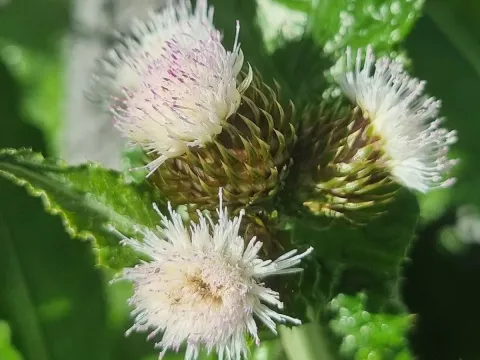
Squarrose thistle
Carduus squarrosus
Squarrose thistle (Carduus squarrosus) is a member of the Asteraceae family. While often viewed as a spontaneous weed in agricultural settings, its biological traits make it a point of interest for soil restoration and as a source for pollinators.
What the section contains
Squarrose thistle
The plant reproduces through seeds that exhibit high germination rates under favorable conditions. Seedlings emerge once soil temperatures reach 10–12 degrees Celsius, with germination occurring in flushes throughout the spring and summer if soil moisture is sufficient.
When intended for cultivation, seeds should be sown at a depth of 1–2 centimeters. Proper spacing is essential to ensure that each individual plant has enough room to develop its basal rosette, which is the primary stage of growth in the first year.
The transition to the reproductive phase occurs in the second year, when the plant develops a tall flowering stalk. Agricultural planning must account for this biennial cycle to manage the crop successfully over multiple seasons.
Sowing in late autumn or early spring is recommended to allow for natural chilling, which helps improve the uniformity of germination across the field.
This species is highly adaptable and thrives in a wide range of soil conditions, including heavy clays and rocky loams. It prefers neutral to slightly alkaline soils but maintains productivity even in nutrient-poor environments.
As a sun-loving plant, it requires full sun exposure to maximize growth and flowering. Shading by larger crops or structures will significantly inhibit its development and reduce its ability to set seeds.
Water requirements are modest. The deep taproot of Carduus squarrosus allows it to access subsoil moisture, making it exceptionally resilient during dry spells and hot summer months when other crops might wilt.
The crop responds well to nitrogen levels but does not require intensive fertilization, making it a low-input option for landowners seeking to improve soil structure or provide forage for bees in marginal areas.
The ideal temperature range for rapid growth is between 20 and 25 degrees Celsius. The plant is hardy and well-suited to regions with significant temperature fluctuations, typical of continental climates.
Fungal pathogens such as powdery mildew represent the primary disease threat, particularly when humidity levels remain high for extended periods. This can lead to leaf yellowing and a reduction in overall plant vigor.
Various weevils are known to damage the flowering heads by feeding on the developing seeds. While this is problematic for seed harvest, it is rarely fatal to the plant itself, which usually maintains its vegetative growth.
Aphids may infest the plant during the early stages of stem elongation. Regular monitoring is recommended to ensure that aphid populations do not overwhelm the plant before it establishes its defensive features.
Proper field hygiene and avoiding soil compaction are critical to preventing root rot issues. Given that the plant has high natural resilience, cultural control methods like crop rotation are more effective than chemical interventions.
Management of these threats should always prioritize ecosystem balance, especially if the plant is grown to support beneficial insects and local pollinator populations.