
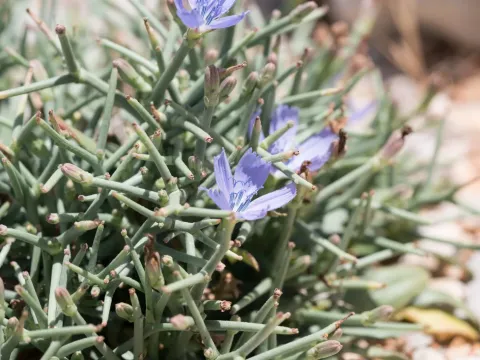
Spiny chicory
Cichorium spinosum
Spiny chicory, scientifically known as Cichorium spinosum, is a hardy perennial belonging to the Asteraceae family. It is native to the Mediterranean region, particularly the rocky coastal areas and islands of Greece, where it has adapted to harsh environmental conditions.
What the section contains
Spiny chicory
The sowing process typically begins in the spring when soil temperatures stabilize between 15 and 18 degrees Celsius. Seeds should be sown at a shallow depth of approximately 1 to 1.5 cm to ensure optimal germination rates in well-prepared garden beds.
For indoor propagation, sowing can start in late winter to secure early seedlings. Once the danger of frost has passed, these seedlings are transplanted into the open field, ensuring they are spaced sufficiently to allow for the expansion of their unique spiny rosettes.
Choosing the right location is critical for this species; it thrives in full sun exposure. Shady conditions will significantly hinder growth and reduce the quality of the leaves, leading to sparse and weak plant development.
Crop rotation is essential for maintaining soil health. It is strongly advised not to plant spiny chicory in ground previously occupied by other Asteraceae members to prevent the buildup of soil-borne diseases that are specific to this family of plants.
Spiny chicory has specific soil preferences, favoring light, sandy, or well-drained soils. Its evolution in coastal environments has endowed it with remarkable salt tolerance, making it a potential candidate for cultivation in challenging or saline environments.
The soil pH should ideally remain within the neutral to slightly alkaline range. Maintaining these levels ensures that the plant can efficiently absorb necessary micronutrients, which directly correlates to the quality and nutritional content of the leaves.
While the species is highly drought-tolerant, consistent and measured watering during the early stages of growth is necessary to develop lush, high-quality leaf rosettes. Overwatering, especially in soil with poor drainage, should be strictly avoided to prevent root rot.
The plant performs best under moderate temperatures. While it can withstand the intense heat of Mediterranean summers, drastic fluctuations or unexpected late frosts can cause stress, leading to premature flowering and a reduction in the flavor quality of the foliage.
Fertilization should be handled with care. A balanced, low-nitrogen approach is recommended to discourage excessive vegetative growth that could compromise the plant's delicate, slightly bitter taste profile, which is highly prized in culinary applications.
The primary agricultural interest in spiny chicory lies in its basal leaf rosettes. These leaves are a staple ingredient in various Mediterranean dishes, valued for their distinctive, slightly bitter, and crisp texture when harvested at the right maturity.
With proper management, the crop can provide multiple harvests throughout the growing season. By harvesting the outer leaves and leaving the central growth point intact, farmers can ensure continued production and maximize the yield of each individual plant.
The roots of the plant contain significant levels of inulin, a prebiotic fiber that supports digestive health. This makes the plant a candidate for functional food production, where both the greens and the roots offer distinct health benefits.
Beyond its culinary and health-related uses, the plant is increasingly popular in xeriscaping and rock gardening. Its striking, spiky form and delicate blue flowers make it an aesthetically pleasing addition to decorative landscapes that require low-water plants.
Market potential for spiny chicory is growing as interest in authentic Mediterranean ingredients and specialty greens rises. Commercial cultivation in greenhouses offers a stable way to provide high-quality produce to local markets year-round.
Aphids are among the most common pests affecting this crop, particularly during warmer months. They target the tender leaves and developing shoots, which can lead to stunted growth and reduced harvest quality if left unchecked.
Slugs and snails pose a particular threat to the young rosettes of spiny chicory, especially in humid or rainy environments. Implementing physical barriers, such as copper tape or fine gravel mulch, is an effective strategy to protect young plantings.
Fungal diseases like powdery mildew can occur if the plants are crowded and air circulation is poor. Keeping adequate spacing between plants and ensuring the foliage remains dry during watering are crucial steps in preventing these outbreaks.
Root rot, driven by stagnant water, is a significant threat that can kill the plant quickly. Ensuring that the planting site has excellent drainage is the best preventative measure against this destructive condition.
Leaf-eating caterpillars can also cause substantial damage by consuming foliage. Regular scouting of the field is necessary to identify early signs of infestation and to apply organic control methods before the damage becomes irreversible.
Harvesting usually begins about two months after sowing, depending on the specific growing conditions. The leaves should be carefully cut with a sharp knife at the base, ensuring the heart of the plant remains undisturbed for continued regrowth.
The best time for harvesting is during the early morning hours. This ensures that the leaves are at their most succulent and hydrated, which is vital for maintaining freshness during the post-harvest cooling and shipping stages.
Post-harvest, the product should be kept at temperatures near 0 degrees Celsius with high humidity. Properly stored greens can maintain their quality for several days, provided they are kept in ventilated packaging to prevent condensation.
Root harvesting for medicinal or industrial purposes is typically performed at the end of the plant's second year of life. At this point, the roots have reached their peak in terms of stored energy and active compound concentration.
Once harvested, roots must be thoroughly cleaned, sliced, and dried at low temperatures. This process preserves the inulin and other vital compounds, resulting in a high-quality product ready for use in health supplements or as a coffee substitute.