
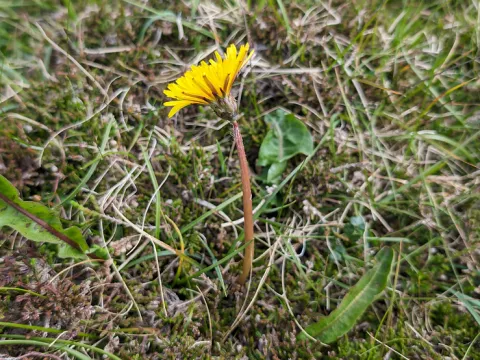
Spotted dandelion
Taraxacum naevosum
Spotted dandelion belongs to the Asteraceae family. In agricultural conditions, propagation by seeds is best performed before winter or in early spring, as seeds require natural stratification for uniform germination.
What the section contains
Spotted dandelion
Sowing is carried out in rows with row spacing of about 30–40 centimeters. The depth of seed placement in the soil should not exceed 0.5–1 centimeter, as small seeds require good contact with a moist substrate.
In the first year after sowing, the plant forms a powerful basal rosette of leaves and actively builds up its root system. Intensive growth of the above-ground biomass begins in the second vegetation season.
To ensure high germination rates, it is necessary to use seeds with high vigor collected from typical specimens. The plant exhibits a high capacity for self-seeding under favorable conditions.
The optimal plant density is about 15–20 plants per square meter, which helps avoid excessive competition for nutrients.
This crop prefers well-drained loamy or sandy soils with a neutral or slightly acidic reaction. It is quite demanding of lighting levels and does not tolerate heavy shading well.
Spotted dandelion exhibits high frost resistance and is perfectly adapted to a temperate climate. The plant is capable of withstanding significant temperature fluctuations characteristic of northern and temperate latitudes.
The soil moisture level should be moderate. Excessive waterlogging often leads to rotting of the taproot, so areas with high groundwater levels are not recommended.
The application of mineral fertilizers, especially nitrogen, stimulates the rapid growth of leaf mass; however, excess nitrogen may reduce the concentration of biologically active substances in the roots.
For successful cultivation, the soil must be thoroughly cleared of perennial weeds, as the crop loses out in competition during the early stages of its development.
The economic productivity of spotted dandelion is determined by the yield of marketable root and leaf mass. Green mass yield under proper care can reach 15–20 tons per hectare.
Root productivity is usually assessed in the third year of vegetation when the root reaches its maximum mass and inulin concentration. The yield of dry root is about 3–5 tons per hectare.
Harvesting leaves can be done twice per season: before the onset of the mass flowering phase and at the end of the summer period when the plant enters a dormant state.
The amount of seeds collected from a plantation strongly depends on meteorological conditions during pollination. Dry and sunny weather during seed maturation promotes higher germination rates.
In intensive cultivation using drip irrigation and controlled nutrition, productivity indicators can be increased by 20–30 percent.
The main threats to the crop are fungal diseases such as powdery mildew, which affects the leaf blade under conditions of high humidity and stagnant air.
Root rots caused by soil-borne pathogens can destroy a significant part of the crop if crop rotation is violated and soil moisture is excessive.
Among pests, the greatest danger is posed by cockchafer larvae, which damage the root system, as well as aphids, which suck sap from young shoots and flower stalks.
Disease control includes adherence to agrotechnical measures: thinning of crops, removal of plant residues, and the use of fungicides in strict accordance with regulations.
Prevention of pest appearance consists of regular inter-row cultivation and the destruction of weeds, which can serve as intermediate hosts for insect parasites.
Harvesting of rhizomes is carried out mainly in the autumn period when the aerial part of the plant begins to die off and all nutrients move into the root.
For digging up roots, special brackets or plows are used, allowing the root to be extracted to its full depth without significant mechanical damage.
After harvesting, the roots are thoroughly cleaned of soil, washed in running water, and small side rootlets are removed, as they reduce the commodity quality of the raw material.
Drying of the raw material should be carried out at a temperature of 40–50 degrees in special dryers, as natural drying in the sun leads to the destruction of useful components.
The finished product is stored in dry, well-ventilated rooms in paper bags, avoiding moisture and direct sunlight to preserve the biochemical composition.