
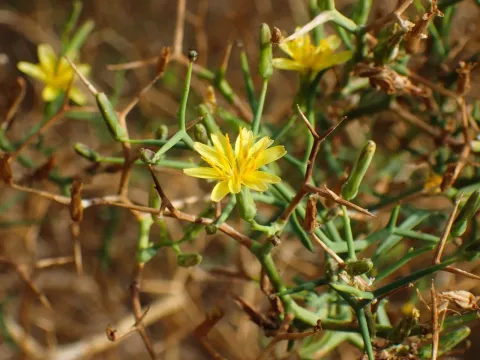
Spiny Launaea
Launaea spinosa
Spiny Launaea (Launaea spinosa) is a perennial shrub belonging to the Asteraceae family. It is a highly specialized xerophyte adapted to survive in harsh desert and semi-desert environments.
What the section contains
Spiny Launaea
The plant is characterized by its woody, spinescent branches, which serve as an effective mechanism to reduce water loss through transpiration and protect it from grazing herbivores.
Its natural habitat ranges from North Africa to the Arabian Peninsula, where it thrives in sandy, stony, or alkaline soils that are often inhospitable to traditional crops.
Launaea spinosa plays a significant role in desert ecosystems by helping to stabilize shifting sands, making it a valuable species for soil conservation and erosion control efforts.
The plant requires full sun exposure and is capable of remaining dormant during extended dry periods, quickly resuming growth when moisture becomes available.
Launaea spinosa is naturally resistant to most agricultural pests due to the high content of latex and secondary metabolites found throughout the plant's tissues.
Pathogenic threats are minimal in the plant's native arid climate, as the dry conditions suppress the development of fungal spores and common bacterial agents.
The primary concern for plant health is poor soil drainage, which can lead to root rot if the plant is grown in areas with excessive water accumulation.
Overgrazing by livestock can physically damage the plant structure, potentially allowing secondary infections to enter through broken branches and stems.
In cultivation settings, preventive measures should focus on maintaining natural aridity and ensuring that soil aeration is sufficient to prevent soil-borne diseases.