
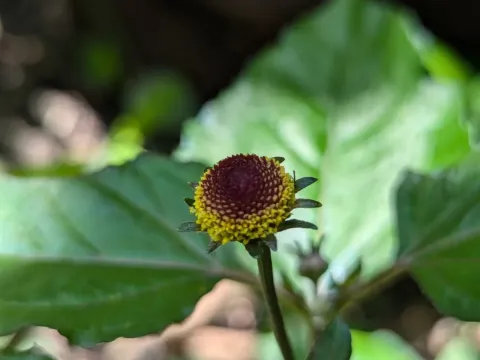
Spilanthes
Acmella oleracea
Acmella oleracea is a tropical plant that requires warm temperatures throughout its growing season to achieve optimal development of its unique flower heads.
What the section contains
Spilanthes
Seeds should be started indoors approximately six to eight weeks before the last expected frost date to ensure a long and productive growing period.
The germination process requires a warm soil temperature, ideally between 20 and 25 degrees Celsius, to achieve a high percentage of successful seedling emergence.
Transplanting into the garden must only occur once the soil has thoroughly warmed and all risks of freezing temperatures have completely passed in the spring.
Proper spacing is essential for plant health; maintaining at least 30 centimeters between individual plants encourages airflow and prevents potential fungal issues.
This member of the Asteraceae family thrives in full sun exposure, which is necessary to maximize the production of spilanthol, the plant's active compound.
Rich, fertile soil with a high content of organic matter and excellent drainage is required for the plant to reach its full vegetative potential during the summer.
Consistent moisture levels are critical, as the plant reacts poorly to prolonged drought and will quickly show signs of wilting if water supply is restricted.
Adding compost or well-rotted manure during the site preparation stage significantly improves the plant's growth rate and enhances the quality of its harvest.
While tolerant of various soil types, the plant prefers a slightly acidic to neutral pH range, avoiding sites prone to waterlogging or heavy clay compaction.
Aphids and spider mites are the most common pests that affect Acmella oleracea, particularly during the hot and dry months of the peak growing season.
Fungal diseases, such as powdery mildew, may develop if the plants are placed too close together or if the foliage remains wet for extended periods.
Integrated pest management strategies, such as introducing beneficial insects, are highly recommended to keep pest populations at a non-damaging level.
Good cultural practices, such as removing debris and weeds around the plants, significantly reduce the risk of secondary infections and pest infestations.
Monitoring the plants weekly allows for the early detection of any stressors, ensuring that corrective measures can be applied before significant damage occurs.
Harvesting usually begins in mid-summer once the flowers are fully open, as this is when the concentration of bioactive compounds is at its highest.
Individual flower heads are picked by hand, which encourages the plant to continue producing new buds throughout the remainder of the growing season.
For immediate use, fresh flower heads are harvested daily, as they offer the characteristic numbing sensation that makes the species famous for culinary purposes.
For storage purposes, the harvested flowers should be dried in a dark, well-ventilated location to preserve their chemical profile and prevent degradation.
Once dried, the flowers should be stored in opaque, airtight containers to ensure that they maintain their potency and flavor for future use in products.