
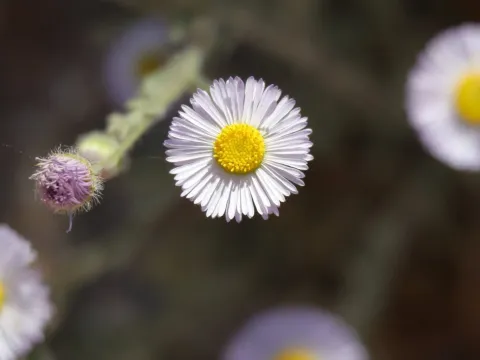
Spreading fleabane
Erigeron divergens
Spreading fleabane (Erigeron divergens) belongs to the Asteraceae family and is a versatile herbaceous plant native to North America. It is recognized for its ability to thrive in diverse and often harsh environmental conditions.
What the section contains
Spreading fleabane
The plant is characterized by its branching stems that can reach significant heights depending on the environmental stress factors. Its foliage is typically pubescent, which helps the plant reduce water loss through transpiration.
Cultivation requires well-drained soil types, as the species is highly susceptible to root zone hypoxia caused by waterlogging. It is remarkably drought-tolerant once established and performs best under full sun exposure.
From an agricultural standpoint, it serves as a valuable cover crop for erosion control in arid regions. Its deep root system aids in soil stabilization, making it a preferred choice for restoring degraded land areas.
The flowering phase is a highlight of this culture, producing numerous daisy-like inflorescences. These flowers are highly attractive to pollinators, providing a vital source of nectar during the early growing season.
The primary threats to Erigeron divergens are fungal infections, particularly powdery mildew, which can occur during periods of high humidity. Maintaining adequate spacing is essential to ensure proper airflow.
Common agricultural pests such as aphids and spider mites frequently target the plant's succulent growth. Integrated pest management strategies, including the introduction of beneficial insects, are highly effective.
Root rot remains a significant concern in areas with inadequate soil drainage. Farmers should ensure the site has proper slope or drainage infrastructure to prevent stagnant water around the root collar.
Viral infections transmitted by sap-sucking insects can cause chlorosis and stunted development. Rigorous weed control is necessary to remove alternative hosts that might harbor these pathogens.
When implementing control measures, care must be taken to minimize chemical drift, as the plant is a significant asset for local pollinator populations. Cultural practices like crop rotation and sanitation are highly recommended.