
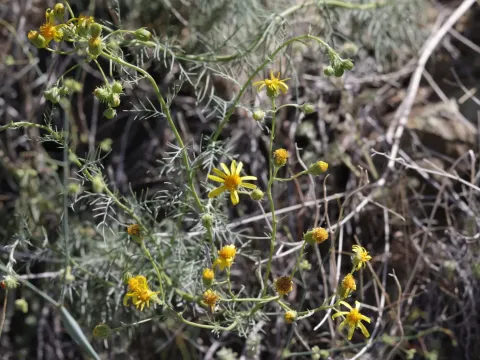
Threadleaf groundsel
Senecio longilobus
Threadleaf groundsel (Senecio longilobus) is a perennial plant species belonging to the Asteraceae family. It is native to the arid and semi-arid regions of North America, where it thrives in diverse open environments.
What the section contains
Threadleaf groundsel
The plant is biologically adapted to poor, rocky, and sandy soil types, demonstrating high drought tolerance. It excels in full sun exposure and requires well-drained soil substrates to maintain physiological health.
Agricultural practices for this species focus primarily on containment rather than cultivation, as the plant is often considered an invasive weed in grazing lands. Management requires careful monitoring of plant density and soil moisture levels.
It prefers a dry climate with low humidity levels. Excess moisture in the soil is detrimental to the roots, often leading to rapid decay. Soil pH preferences range from slightly acidic to slightly alkaline, which matches most of its native habitats.
Field management involves systematic monitoring of rangelands to prevent the displacement of native forage grasses. If the plant becomes established in a pasture, it typically indicates that the soil ecosystem is imbalanced or overgrazed.
The most significant threat associated with threadleaf groundsel is its toxicity to livestock. It contains pyrrolizidine alkaloids, which cause permanent liver damage in cattle, horses, and sheep if consumed in forage.
Various insect species, specifically adapted to sequestering plant toxins, may serve as primary pests. These include specialized moths and beetles that consume the foliage, although they do not generally pose a risk to the plant's survival.
Fungal pathogens such as rust and powdery mildew are common in areas where the plant is dense. These diseases are most prevalent during unusually wet seasons, potentially reducing the plant's vigor in localized patches.
Harvesting is not recommended due to the toxicity of the biomass. Instead, control measures like mowing before flowering or spot-spraying with herbicides are standard procedures to ensure the safety of the surrounding vegetation.
Integrated weed management programs are essential to control the spread of this species. Combining mechanical removal, grazing management, and judicious herbicide use provides the most consistent long-term results in rangeland protection.