


Reference · Crops
Thistle
Cirsium Mill. emend. Scop.
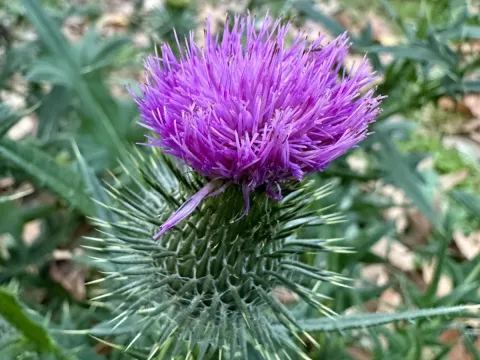
Thistle (Cirsium) is a genus of flowering plants in the Asteraceae family, known for their prickly leaves and deep taproots. Botanically, these plants are highly evolved perennials that can persist in a field for many years due to their regenerative root system.
5
items
What the section contains
Marketplace
Products in this section · 1
Thistle
Originating from the temperate regions of the Northern Hemisphere, thistle species have successfully naturalized globally. They are found in diverse habitats ranging from open grasslands to heavily disturbed agricultural lands, reflecting their high ecological plasticity.
Thistles require sufficient sunlight to thrive and are sensitive to heavy shading. While they can tolerate a wide variety of soil types, they prefer soils that are rich in nutrients and have good moisture-holding capacity to support their rapid vegetative growth.
The botanical structure of the thistle is optimized for survival. The complex root system functions as a storage organ for carbohydrates, allowing the plant to recover quickly after mowing or grazing, which is why chemical control is often necessary for total eradication.
While often treated as an aggressive weed, thistles have significant ecological value. They provide essential nectar for butterflies, bees, and other beneficial insects, making them a key component of pollinator-friendly agricultural buffer zones.
Thistle populations are often impacted by various insect pests, including stem-boring weevils and gall-forming flies that disrupt the plant's reproductive cycle and overall physical integrity.
Fungal pathogens such as rust fungi (Puccinia spp.) are major natural enemies of the genus. These infections can drastically reduce the plant's vigor and prevent the production of viable seeds, acting as a natural biological control agent.