
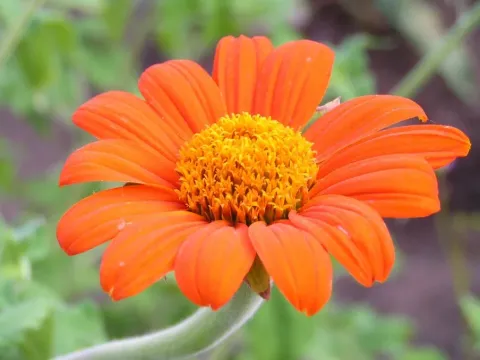
Tithonia
Tithonia
Tithonia seeds should be sown outdoors only after the risk of frost has passed and the weather is consistently warm. For earlier flowering, it is highly recommended to use the seedling method of cultivation.
What the section contains

Tithonia
Seeds are started in containers 4–6 weeks before the intended transplanting date. They require shallow planting or just a light covering of soil, as a certain level of light is necessary for successful germination.
The optimal temperature for seed germination is between 20 and 22 degrees Celsius. Once seedlings emerge, slightly lowering the temperature helps prevent stem elongation and ensures stronger, stockier plants.
Pricking out should be carried out at the stage of two true leaves into individual pots. Hardened seedlings are then transplanted into the soil with a spacing of 50–70 centimeters, keeping in mind their vigorous growth habits.
Direct sowing into the ground is suitable only for southern regions with a long growing season. In temperate climates, direct seeding often fails to produce flowers before the arrival of autumn chill.
Tithonia is a heat-loving crop belonging to the Asteraceae family. Originating from Central and North America, the plant is naturally adapted to bright sunlight and long daylight hours, making it highly dependent on high light intensity.
The crop demands full sun for optimal development and prolific flowering. In shaded areas, the stems tend to stretch excessively, and the blooming process may be significantly inhibited or fail completely.
Soil preferences include well-drained, fertile loams or sandy soils with a neutral to slightly acidic pH. Poor drainage or waterlogging at the roots is detrimental and often leads to root rot diseases.
While mature Tithonia plants are notably drought-tolerant, consistent watering is essential during the early stages of establishment. Once established, the extensive root system allows the plant to withstand short periods of dry weather.
Agrotechnical considerations include managing the wind resistance of the plant. Since Tithonia can reach heights of 2–3 meters, it is often necessary to provide support or plant it in sheltered locations to prevent stem damage.
Tithonia is widely used as an effective green manure (biomass fertilizer) in tropical regions. Its rapid biomass accumulation provides large quantities of organic matter rich in nitrogen, phosphorus, and potassium.
The economic value of the crop also lies in its role as a prolific honey plant. The flowers attract numerous pollinators, including bees and butterflies, which enhances the productivity of surrounding agricultural crops.
In ornamental horticulture, the yield of Tithonia is measured by the quantity of blossoms. With proper care, a single plant can produce dozens of vibrant orange flower heads that remain attractive throughout the autumn months.
The biomass of the plant, when chopped and incorporated into the soil, serves as an excellent nutrient source for subsequent crops in a rotation. This is particularly valuable in organic farming systems on nutrient-deficient soils.
For seed collection, it is necessary to wait until the flower heads have withered and the achenes have turned brown. Seeds stored in a dry, cool place generally retain high germination rates for 2–3 years.
The most common pests affecting Tithonia are aphids, which colonize young shoots and flower buds to feed on cell sap. Control measures involve the use of contact insecticides or washing the plants with insecticidal soap.
In conditions of high humidity and poor air circulation, plants are prone to powdery mildew. Ensuring proper plant spacing is a key preventative measure to maintain sufficient airflow around the foliage.
Root rot, triggered by overwatering or poor soil drainage, poses a significant threat to young plants. This condition leads to wilting and death, making the management of watering regimes a top priority for growers.
Occasionally, fungal leaf spots may appear on the foliage. In such cases, applying broad-spectrum fungicides according to the manufacturer’s instructions can effectively mitigate the spread of the infection.
Slugs and snails can cause considerable damage to young seedlings at the start of the season. Protective barriers, such as copper tape or crushed eggshells around the base, are effective strategies for home gardeners.