
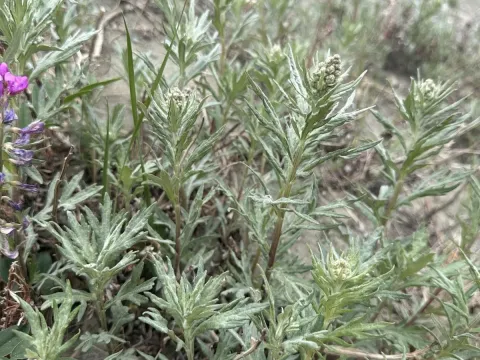
Tiles wormwood
Artemisia tilesii
Tiles wormwood (Artemisia tilesii) is a perennial herbaceous plant belonging to the Asteraceae family. It is a highly resilient species, well-adapted to the challenging climatic conditions of the Arctic and subarctic regions of North America and Eurasia.
What the section contains
Tiles wormwood
The natural habitat of this species includes riverbanks, rocky slopes, and moist tundra regions. This adaptation allows the plant to thrive in environments where temperature fluctuations are severe and the growing season is significantly limited.
For agricultural cultivation, the plant requires well-drained, nutrient-poor to moderate soils. While it appreciates moisture, it is sensitive to waterlogging, which necessitates careful site selection, preferably with sandy or gravel-rich soil structures.
Tiles wormwood thrives in cool environments and does not require winter protection. Its deep root system provides stability and allows the plant to survive in thin soils, making it an excellent candidate for restoration of disturbed lands in northern latitudes.
The medicinal utility of the plant is documented in traditional ethnobotanical practices. Its use as an herbal remedy highlights the importance of maintaining organic cultivation standards to ensure the purity and quality of the final harvest.
The primary threats to Tiles wormwood in a cultivated environment are fungal diseases, such as root rot and powdery mildew, which are often triggered by improper air circulation and excessively damp soil conditions.
Pests that commonly affect this plant include aphids, which cluster on young shoots, and spider mites during drier periods of the season. Leaf-chewing insects can also impact the overall vitality of the plant if infestations occur early in the growth cycle.
Agricultural management should prioritize cultural controls, such as adequate spacing between rows to promote airflow and the prompt removal of any infected plant material to prevent the spread of diseases.
Integrated pest management is recommended over the use of harsh chemical pesticides, as the crop is frequently harvested for its medicinal properties. Biological control agents often provide sufficient protection against common garden pests.
Consistent monitoring of soil moisture levels is critical. Balancing the plant's need for consistent hydration with the requirement for drainage is the most effective strategy for preventing both abiotic stress and biotic threats.