
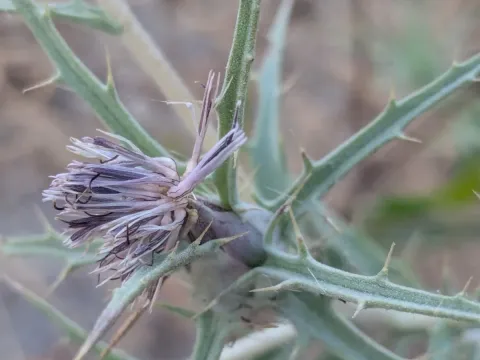
Thin-leaved safflower
Carthamus tenuis
Carthamus tenuis is an herbaceous annual plant belonging to the Asteraceae family. It is recognized for its remarkable ability to thrive in arid conditions and poor soil types where conventional crops often fail to produce a viable yield.
What the section contains
Thin-leaved safflower
The sowing process is typically carried out in early spring to ensure the seeds benefit from stored soil moisture. Soil temperatures should be at least 5–8 degrees Celsius for initial germination and root establishment.
Seeds are usually planted at a depth of 3–5 centimeters. Proper seed-to-soil contact is essential for rapid emergence, especially in drier environments where moisture retention in the topsoil is limited.
Standard plant densities range from 200,000 to 350,000 plants per hectare. This density ensures that individual plants have sufficient space to develop their characteristic branching habit and maximize seed head production.
Row spacing can be adjusted based on the farming equipment available, ranging from 15 cm for grain-drill planting to 45 cm for row-crop systems, which allow for mechanized weed control throughout the season.
This crop is highly undemanding regarding soil fertility, adapting well to saline, alkaline, or degraded soils. Its deep taproot system allows it to access water deep within the soil profile, providing significant drought tolerance.
Carthamus tenuis requires full sun exposure for optimal growth and development. It is highly sensitive to shading, which can decrease the number of flower heads and overall oil content in the seeds.
The ideal temperature range for active vegetative growth is between 20 and 28 degrees Celsius. The crop shows great resilience to the high ambient temperatures common in desert-margin or semi-arid agricultural regions.
Good soil aeration is critical. The roots are susceptible to damage if water-logging occurs, so field selection should focus on well-drained soil types to prevent the onset of root-borne pathogens.
As a nutrient-efficient crop, it does not require intensive fertilization, making it a sustainable choice for low-input farming systems aimed at maintaining ecological balance while producing an industrial oil crop.
Fungal diseases, including rust and Fusarium wilt, represent the primary biological threats to this crop. Crop rotation remains the most effective management strategy to prevent the buildup of soil-borne diseases.
Insect pests such as safflower flies and aphids can cause significant damage to the developing capitula. Early scouting of the fields is essential to determine if intervention is necessary to protect the potential seed yield.
Sanitation practices, such as removing weeds that act as alternative hosts for pests and diseases, are vital. Proper hygiene helps maintain a healthy plant environment throughout the entire growing season.
Chemical control should be used judiciously and only when monitoring indicates that pest populations have reached an economic threshold. This minimizes the risk of environmental impact and protects beneficial insect populations.
Resistant cultivars and seed treatments are highly recommended to establish a strong start for the crop. These measures significantly reduce the incidence of seedling damping-off and other early-stage issues.