
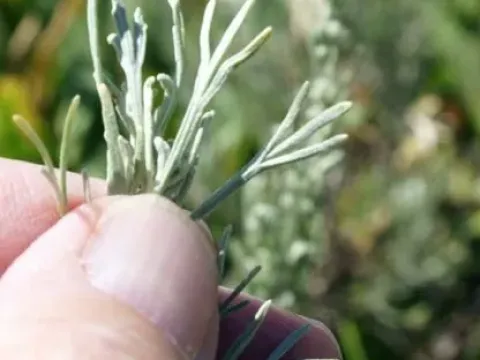
Three-tip sagebrush
Artemisia triparitita
Three-tip sagebrush (Artemisia tripartita) is a perennial shrub belonging to the Asteraceae family. This species is widely recognized for its unique leaf morphology, where leaves are deeply cleft into three distinct lobes, giving the plant its specific name.
What the section contains
Three-tip sagebrush
The plant is highly specialized for arid and semi-arid environments, favoring well-drained rocky or gravelly soils. It is typically found in deep, permeable soil profiles that allow deep root penetration, which is vital for survival during prolonged droughts.
Ecologically, this species is a critical component of shrub-steppe habitats, providing essential food and shelter for various wildlife species. It thrives in regions with cold winters and hot, dry summers, exhibiting strong cold tolerance.
Regarding soil fertility, three-tip sagebrush is adapted to low-nutrient environments. It does not require intensive fertilization, as excessive nutrient application can lead to competitive exclusion by faster-growing non-native grasses and weeds.
Sunlight is the most critical environmental requirement. The species is obligate heliophyte, meaning that even partial shading from canopy or neighboring tall shrubs can significantly hinder photosynthesis and vegetative growth.
The most significant threat to three-tip sagebrush populations is the alteration of fire cycles. While the species is adapted to occasional disturbance, frequent or overly intense wildfires can lead to local extirpation, as it does not resprout vigorously after fire.
Invasive annual grasses, such as cheatgrass, represent a major competitor for water and soil nutrients. These invasives often increase fire frequency, creating a negative feedback loop that prevents the establishment of sagebrush seedlings.
Fungal diseases, including various types of root rot, can occur if the soil remains waterlogged for extended periods. Proper drainage is essential to protect the crown and roots of mature plants from infection.
Herbivory pressure from both wild ungulates and livestock must be managed. Overgrazing, especially during the early growing season, can deplete stored energy reserves in the roots, leading to reduced vigor and eventual plant mortality.
Insect pests, including various sagebrush defoliators, can occasionally cause severe damage to leaf tissue. However, healthy, well-spaced stands of sagebrush are generally resilient to minor outbreaks of native insect populations.