
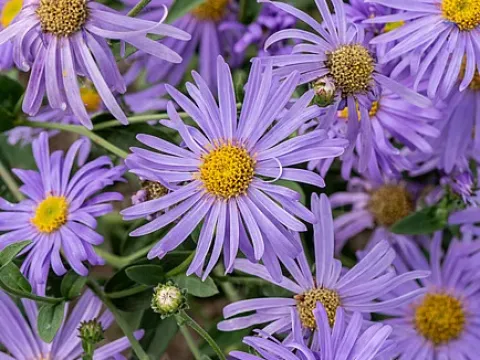
Thomson's aster
Aster thomsonii
Thomson's aster is typically propagated via seeds or vegetative division of mature root clumps. Sowing seeds directly into prepared garden beds is best done in late autumn or early spring once the soil thaws.
What the section contains
Thomson's aster
For indoor propagation, seeds should be sown in seedling trays during early spring. Maintaining a steady temperature between 18 and 20 degrees Celsius is essential for optimal germination rates.
Seedlings should be pricked out into individual pots once they reach the two-leaf stage. This promotes root development and prepares the young plants for successful transplantation into the field.
Transplanting to the permanent location in the garden is recommended after the last frost date. Ensure the soil is well-prepared and loosened to encourage deep root penetration for the young perennials.
Division of older, overcrowded clumps should be performed every three to four years, preferably in the spring, to rejuvenate the plant and maintain vigorous bloom cycles.
Aster thomsonii, a member of the Asteraceae family, is a herbaceous perennial valued for its elegant habit and late-season flowers. It adds significant aesthetic value to perennial borders and mixed garden landscapes.
This species thrives in full sun exposure, although it can tolerate partial shade in warmer climates. Sufficient sunlight is crucial for preventing stem elongation and ensuring strong, upright growth.
The soil requirements include good drainage and moderate fertility. It prefers loam or sandy loam substrates with a neutral pH, avoiding compacted or waterlogged soils which can lead to root issues.
While the plant shows some tolerance to temporary dry spells, consistent moisture is required during its peak flowering season. Drip irrigation or careful base watering is preferred over overhead watering.
Routine garden maintenance involves mulching to conserve soil moisture and suppress weed growth. Applying a balanced fertilizer during early spring encourages healthy foliage and robust flower production.
Powdery mildew is the most prevalent disease affecting this culture, especially in humid and poorly ventilated conditions. Management involves using fungicides and ensuring adequate plant spacing for airflow.
Fusarium wilt remains a significant threat, primarily attacking the root zone and stems. Affected plants show rapid wilting, necessitating prompt removal to prevent soil contamination across the plot.
Aphids and spider mites are common pests that feed on sap, weakening the plant's defense mechanisms. Targeted application of appropriate acaricides or systemic insecticides helps maintain plant health.
Slugs and snails can cause cosmetic and structural damage during the early growth stage, often requiring manual removal or the use of eco-friendly barrier traps in the garden environment.
- Sanitary pruning of infected foliage.
- Avoidance of overhead irrigation.
- Monitoring for early signs of pest infestation.