
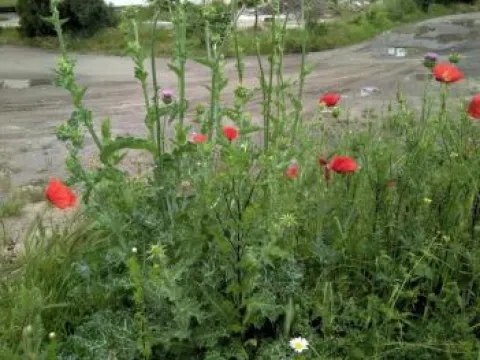
Thracian thistle
Carduus thracicus
Thracian thistle (Carduus thracicus) is a perennial herbaceous plant belonging to the Asteraceae family. It is primarily distributed in the Balkan region, specifically within mountainous and steppe ecosystems.
What the section contains
Thracian thistle
The plant exhibits high adaptability to drought, thriving in open, sunny environments where most competing vegetation may struggle during peak summer months.
Soil requirements are centered on well-drained, calcareous substrates. The species does not tolerate waterlogged conditions, which restricts its growth to slightly elevated or sloped terrains.
In terms of agricultural significance, it is often classified as a weed in pastures and rangelands due to its rapid spread and physical presence that hinders livestock grazing.
Effective management requires understanding its phenology. Mechanical destruction of the basal rosette is the most efficient method to prevent plant maturation and further seed dispersal.
Common fungal diseases, such as powdery mildew, often affect the foliage of the plant when humidity levels rise during the late spring period.
Various insect pests, including stem-boring weevils and aphids, frequently target the developing flower buds, causing significant damage to the reproductive structure.
Competition with native grasses and other forage crops is a major factor in managed agricultural fields, often leading to the need for chemical or biological control.
Overgrazing of surrounding vegetation can exacerbate the spread of the thistle, as it occupies empty niches created by the loss of dominant pasture species.
Biological control agents, such as specific gall-forming insects, are currently being studied as a sustainable approach to reduce the thistle population in wild areas.