
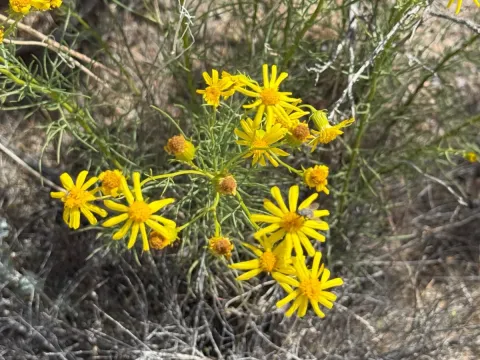
Threadleaf groundsel
Senecio flaccidus
Threadleaf groundsel (Senecio flaccidus) is a plant species belonging to the Asteraceae family. In agricultural settings, it is recognized not as a crop, but as a persistent weed that invades range and pasture lands throughout its native habitat in North America.
What the section contains
Threadleaf groundsel
The plant originates from the arid and semi-arid regions of the Southwestern United States and Mexico. It is highly adapted to growing in poor soils, including gravelly or sandy substrates, often thriving in disturbed areas where competition from native grasses is reduced.
The climate requirements for this species include high solar radiation and tolerance to prolonged drought periods. It displays significant resilience to heat, utilizing its morphological traits to minimize transpiration and maintain physiological activity under dry conditions.
Botanically, the plant is characterized by its thin, thread-like leaves covered with a soft, white pubescence. This covering acts as a protective layer against environmental stressors, allowing the plant to persist in harsh ecological niches.
The economic impact of this species is detrimental, as it is toxic to livestock due to pyrrolizidine alkaloids. Ingestion of the plant causes irreversible liver damage in cattle, horses, and sheep, leading to significant losses in the livestock industry.
The primary threat posed by Threadleaf groundsel is its rapid spread in overgrazed pastures. Its ability to produce high quantities of wind-dispersed seeds makes it a major concern for land managers attempting to maintain healthy rangeland ecosystems.
Managing the weed is challenging because it is largely ignored by grazers due to its toxicity, which provides it with a competitive advantage over beneficial forage species. Biological control agents are limited, and natural predators rarely cause significant damage.
Mechanical control methods, such as pulling or mowing, must be performed prior to seed set to prevent further infestation. Repeated efforts are often required to exhaust the carbohydrate reserves stored in the roots of this perennial plant.
Chemical control involving selective herbicides is a common practice, though effectiveness varies based on plant maturity. Precise timing during the active growth phase is critical to ensuring the herbicide reaches the root system.
Integrated vegetation management remains the most effective strategy. By preventing overgrazing and promoting the establishment of competitive perennial grasses, land managers can significantly reduce the establishment of this invasive species.