
Senecio citriformis
Senecio citriformis
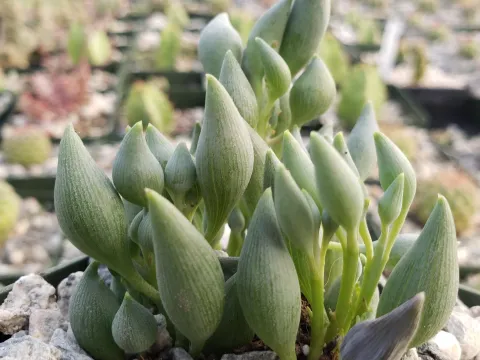
Senecio citriformis is a distinct succulent species belonging to the Asteraceae family. Originating from the arid regions of Southern Africa, it has evolved to thrive in harsh, dry environments by storing water in its unique, lemon-shaped succulent leaves which feature interesting longitudinal stripes.
What the section contains
Senecio citriformis
Botanically, this plant is characterized by its trailing or semi-erect stems, making it an excellent candidate for hanging baskets or container arrangements. Its foliage has a dusty, glaucous appearance which adds a sophisticated touch to any collection of succulent plants.
When it comes to cultivation requirements, the most critical factor is the choice of growing medium. It demands a highly porous and well-draining soil mix, typically consisting of a succulent-specific substrate combined with coarse sand or perlite to prevent moisture retention around the roots.
Light exposure is another essential pillar of its care. Senecio citriformis requires bright, indirect sunlight to maintain its compact habit and vibrant appearance. Insufficient lighting will inevitably lead to leggy, elongated growth and a loss of the plant's structural integrity.
Watering should be approached with caution, adhering to the "soak and dry" method. Allow the soil to dry out completely between waterings, especially during the dormant winter period, as the plant is highly susceptible to root rot if left in constantly damp or soggy soil conditions.
The primary pests affecting Senecio citriformis include mealybugs and spider mites. These pests thrive in dry, stagnant air conditions and can cause significant damage by feeding on the plant's succulent tissues, leading to discoloration and stunted development of the growing tips.
Fungal diseases, specifically root and stem rot, represent the most significant threat to the health of this culture. These issues are almost exclusively caused by overwatering or poor ventilation, which prevents the soil from drying efficiently and encourages the proliferation of pathogens.
Prevention is the best strategy for managing these threats. This includes maintaining proper air circulation around the plant, inspecting the leaves regularly for early signs of infestation, and ensuring that no water remains in the leaf axils, which could lead to secondary infections.
If an infestation occurs, targeted use of insecticidal soaps or systemic treatments may be necessary. Always ensure that the treatment is applied sparingly and that the plant is kept out of direct sunlight immediately after application to avoid chemical leaf burn.
In cases of severe rot, propagation is the most effective way to preserve the plant. Remove healthy segments of the stem, allow them to callous over for a few days in a shaded area, and place them into a fresh, dry succulent mix to encourage the development of new, healthy roots.