
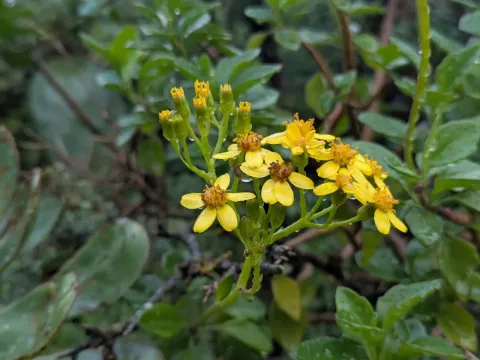
Senecio angulatus
Senecio angulatus
Senecio angulatus, commonly known as climbing groundsel, is a perennial succulent vine belonging to the Asteraceae family. It is characterized by its ivy-like, fleshy leaves and rapid growth habit in favorable environments.
What the section contains
Senecio angulatus
Native to South Africa, the plant thrives in mild climates. It is widely cultivated for ornamental purposes, specifically for covering walls, fences, and pergolas where it can climb effectively using its long, robust stems.
The culture requires well-draining soil to prevent root rot, as the succulent nature of the plant makes it highly susceptible to waterlogged conditions. A sandy or gritty soil mix is generally considered optimal for its development.
Exposure to direct sunlight is crucial for this species. While it can tolerate partial shade, full sun promotes denser foliage and more vigorous flowering, which is essential for its aesthetic utility in landscaping.
Agronomic management involves periodic pruning to keep the plant within desired bounds. Irrigation should be applied moderately, allowing the substrate to dry out between watering sessions to mimic the plant's natural habitat.
The primary pests affecting Senecio angulatus are aphids, mealybugs, and spider mites, particularly in protected or enclosed growing environments where air circulation is restricted.
Fungal diseases such as leaf spots or powdery mildew may develop if the humidity levels are consistently too high, especially when foliage remains wet for extended periods.
Effective management strategies include cultural practices such as improving airflow and careful watering, supplemented by targeted pesticide applications only when pest populations exceed economic thresholds.
Regular sanitation, such as removing fallen leaves and dead stems, is essential to reduce the risk of secondary infections and pest infestations in the planting area.
To ensure long-term plant health, monitoring for early signs of stress is vital, as Senecio angulatus responds poorly to prolonged cold snaps or excessive water retention in the root zone.