
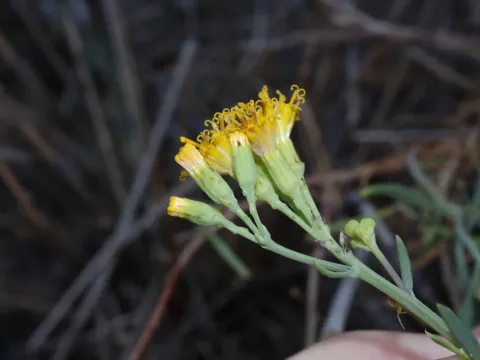
Senecio cunninghamii
Senecio cunninghamii
Senecio cunninghamii is a member of the Asteraceae family, native to the Australian continent. It is recognized as a hardy perennial shrub known for its resilience in varying environmental conditions.
What the section contains
Senecio cunninghamii
The plant thrives in full sun exposure. It is well-adapted to habitats where light intensity is high, which promotes healthy growth and the development of its characteristic foliage.
Regarding soil requirements, this species favors well-draining, sandy or loamy soils. Drainage is the most critical factor; waterlogged soil will inevitably lead to root compromise and decay.
Climatically, it prefers temperate environments. While it can withstand periods of limited water availability, it requires protection from severe frost to ensure its survival throughout the winter months.
General management involves routine pruning to maintain plant shape and prevent the development of woody, unkempt stems. Fertilizer application should be focused on the early spring growth phase.
Root rot caused by Oomycetes and various fungi is the most significant threat to Senecio cunninghamii. This is almost exclusively associated with improper irrigation management or heavy, non-draining soil types.
Aphids represent the primary insect pest, frequently clustering on succulent shoot tips. Their feeding can cause foliage distortion and reduce the plant's overall vigor during the growing season.
Powdery mildew may manifest as a white dusty coating on the leaves if air circulation is restricted. Increasing ventilation and avoiding overhead irrigation can effectively control this issue.
Spider mites are potential threats during hot, dry weather. They thrive in low-humidity environments, making it necessary to monitor the undersides of leaves during peak summer heat.
To preserve plant health, growers should practice strict sanitation. Removing dead or diseased plant matter reduces the reservoir for pests and pathogens in the cultivation area.