
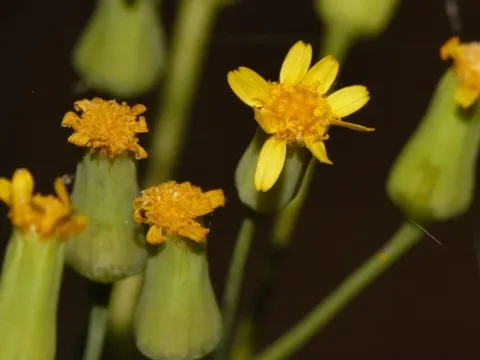
Senecio abyssinicus
Senecio abyssinicus
Senecio abyssinicus is an annual herbaceous plant belonging to the Asteraceae family. Known primarily in its native East African regions, it serves as a valuable forage component due to its rapid growth rate and resilience under specific climatic conditions.
What the section contains
Senecio abyssinicus
Sowing times are strictly dependent on the onset of the rainy season. Farmers typically wait for the first consistent rains to ensure the soil is sufficiently moist, which is crucial for triggering the germination of the plant's fine seeds.
The planting method involves broadcasting seeds onto a prepared seedbed. Since the seeds are small, they are usually covered with a very light layer of soil or raked in to ensure proper soil-to-seed contact without burying them too deeply.
Seeding rates should be adjusted based on the intended use of the crop. Higher density is preferred for green fodder production to maximize biomass per square meter, while lower density is used when the crop is intended for seed regeneration.
Early season sowing is recommended to ensure the plant completes its main vegetative growth phase before the peak of the dry season, thereby maximizing the total seasonal yield of the forage.
This crop thrives in well-drained, fertile soils with a good balance of organic matter. It is particularly sensitive to waterlogging, so fields with poor drainage or heavy clay content should be avoided to prevent root diseases.
The optimal climatic requirements include moderate temperatures, typically ranging between 18 and 25 degrees Celsius. While it handles heat well, it performs best in regions that experience moderate diurnal temperature fluctuations.
Adequate sunlight is essential for the accumulation of sugars and secondary metabolites in the leaves. Shaded areas result in stunted growth and a significant reduction in the nutritional quality of the forage mass.
Soil pH should ideally be neutral or slightly acidic. Proper soil preparation, including loosening the top layer, is necessary to facilitate root development, especially during the initial stages when the plant is establishing its canopy.
Supplemental irrigation may be necessary if rainfall is erratic. Providing consistent water during the vegetative stage significantly increases the total volume of biomass and improves the plant's structural integrity.
Fungal pathogens such as powdery mildew are the most common threats to Senecio abyssinicus, especially in high-humidity environments. These fungi can rapidly cover the foliage, inhibiting photosynthesis and reducing the overall crop quality.
Pests like aphids and leaf miners often target the succulent parts of the plant. If left untreated, these infestations can lead to leaf yellowing and distorted growth, making the forage less palatable for livestock.
Weed competition is a major challenge during the early seedling stage. Because the crop grows slowly initially, mechanical weeding between rows is necessary to prevent competitive plants from dominating the field and depriving the crop of nutrients.
Nematode infestations can occur in areas where the same crop is grown repeatedly. Implementing a proper crop rotation system is the most effective way to break the life cycle of these soil-borne pests and maintain soil health.
Integrated Pest Management (IPM) is strongly advised. Regularly scouting the fields for early signs of disease and pest damage allows for targeted interventions, reducing the need for broad-spectrum chemical applications.