
Cooper's paperflower
Psilostrophe cooperi
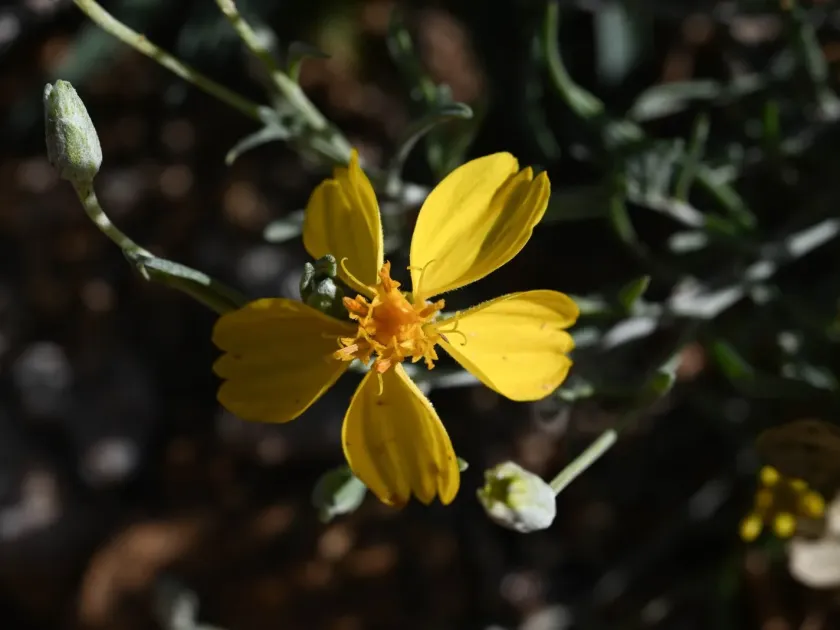
Description
Growing requirements
Cooper's paperflower (Psilostrophe cooperi) is a member of the Asteraceae family, native to the arid desert regions of the southwestern United States and northern Mexico. It is a perennial plant well-adapted to harsh environments and limited water availability.
The plant thrives in dry, gravelly, or sandy soils that provide excellent drainage. It is commonly found in desert scrub habitats where high temperatures and low annual precipitation are the norm, making it a highly resilient species in its native range.
Botanically, it is recognized by its woolly, white-tomentose stems and narrow leaves. This heavy pubescence is a key physiological adaptation that reduces transpiration and protects the plant from intense solar radiation found in desert landscapes.
Its root system is characterized by depth and robustness, allowing the plant to reach deep soil moisture reserves. In cultivation or management scenarios, preventing over-irrigation is critical, as the species is highly susceptible to root decay when exposed to excess moisture.
While often aesthetically pleasing due to its bright, persistent yellow flowers that resemble paper, it is not an agricultural crop. It is widely recognized by range managers as a toxic weed that poses significant risks to animal husbandry operations.
Main diseases and pests
The primary concern regarding Cooper's paperflower is its high toxicity to livestock, particularly sheep and goats. The plant contains sesquiterpene lactones, which can cause severe health complications and, in many cases, mortality if ingested in sufficient quantities.
Livestock that consume the plant often exhibit symptoms such as loss of appetite, lethargy, respiratory distress, and physical weakness. Because the toxic compounds remain active even after the plant is harvested or dried, it presents a year-round threat to grazing safety.
Natural pests are limited because the plant's chemical composition serves as an effective defense mechanism against most herbivores. Consequently, there are few natural biotic stressors that successfully suppress its population growth in the wild.
Disease management for this species is rarely a focus since it is highly resistant to standard pathogens. The main agricultural concern remains the mechanical or chemical control required to prevent its encroachment into grazing lands where livestock reside.
Effective management strategies focus on identification and removal before the seed-setting stage. Protecting rangelands from this species involves diligent monitoring and selective herbicide application to maintain the health and safety of livestock herds.