
Psathyrotes ramosissima
Psathyrotes ramosissima
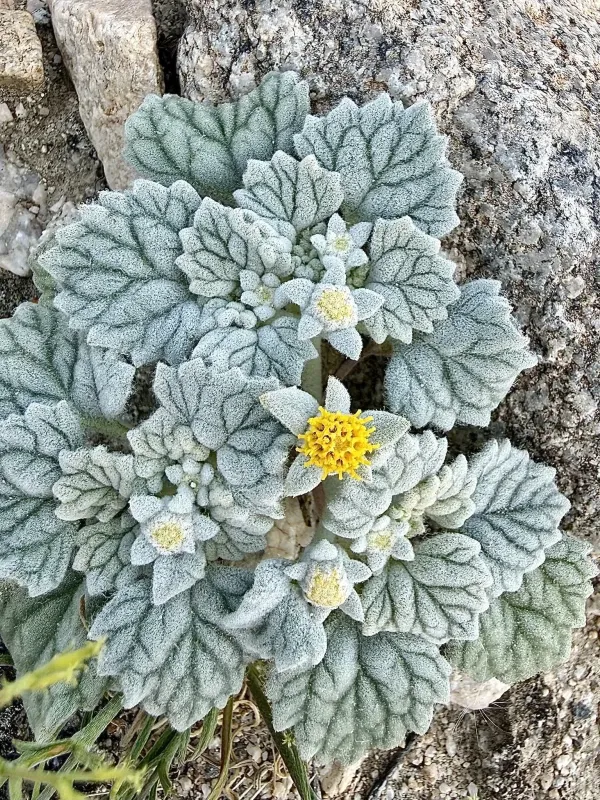
Description
Growing requirements
Psathyrotes ramosissima, commonly known as the turtleback or branched psathyrotes, is a distinctive member of the Asteraceae family. It is recognized as a hardy xerophytic species, capable of thriving in the most challenging arid environments of the Southwestern United States and Northern Mexico.
The plant is native to desert shrublands and rocky outcrops, particularly within the Mojave and Sonoran Deserts. It has evolved to survive with extremely low annual precipitation, often relying on sporadic desert rain events to complete its brief but intense life cycle.
Botanically, the species is defined by its compact, low-growing, and highly branched architecture. The leaves are covered with dense, grayish-white hairs, which act as a physical barrier to moisture loss and reflect solar radiation to mitigate the intense desert heat.
Regarding soil requirements, the species demands well-drained, porous media such as sand, gravel, or salty flats. In cultivation or restoration projects, it is essential to avoid waterlogged conditions, as the root system is highly sensitive to hypoxia and fungal decay when soil moisture remains high.
Host use of this culture currently focuses on environmental reclamation and desert landscaping. Its capacity to stabilize shifting sands and withstand high soil salinity makes it a subject of ongoing interest for ecological restoration experts looking to improve biodiversity in desolate regions.
Main diseases and pests
The primary threats to Psathyrotes ramosissima are root rot and fungal pathogens caused by improper irrigation or overly humid environmental conditions. Because of its specialized chemical defenses, including essential oils, it is rarely impacted by common agricultural pests.