
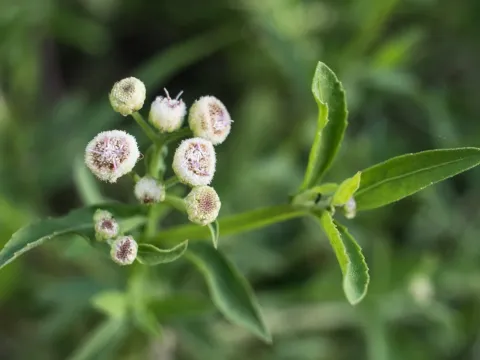
Pluchea sagittalis
Pluchea sagittalis
Pluchea sagittalis, commonly known as arrowleaf pluchea, is a perennial herbaceous plant belonging to the Asteraceae family. It is native to South America and typically thrives in humid environments such as marshes, riverbanks, and low-lying areas with high soil moisture.
What the section contains
Pluchea sagittalis
To successfully cultivate this crop, farmers must prioritize soil conditions that can retain significant amounts of water. While the plant is hardy, it shows optimal growth performance in nutrient-rich, silty loam soils that maintain a consistent hydration level throughout the growing season.
The botanical structure of Pluchea sagittalis is defined by its arrow-shaped leaves and distinctively winged stems, which can grow up to 1.5 meters tall. These morphological features are adaptations to its natural riparian habitat, allowing the plant to stand stable in water-saturated soils.
Climatic requirements focus on warmth and humidity. It is a subtropical species that excels in temperature ranges between 20°C and 30°C. Frost sensitivity is high, making it necessary to manage planting schedules in temperate zones to avoid the damaging effects of late spring or early autumn frosts.
The economic value of this crop is primarily driven by its application in traditional medicine and the supplement industry. Research into its chemical composition, specifically its antioxidant and anti-inflammatory properties, continues to drive interest in organized field production.
Common agricultural threats for Pluchea sagittalis include fungal infections like powdery mildew, particularly when plant density is too high, preventing proper aeration. Implementing adequate spacing between rows is essential to mitigate these humidity-related risks.
Insect pests, including aphids and whiteflies, are known to target this species. These pests can severely weaken the plant by feeding on sap and serving as vectors for various plant viruses, which necessitates proactive monitoring during the vegetative stage.
Integrated Pest Management (IPM) strategies are highly recommended for this crop. These include the use of beneficial insects, such as ladybugs for aphid control, and the application of organic-certified botanical insecticides to preserve the quality of the harvested biomass.
Root health is another critical factor. Overwatering combined with stagnant conditions can lead to root rot. Ensuring that fields have proper drainage while maintaining soil moisture balance is a delicate but necessary balance for agronomists managing this species.
Finally, weed management is essential during the early development phases. Because the plant competes poorly with aggressive perennial grasses during its establishment, regular mechanical weeding or the use of mulching materials is advised to ensure the crop attains a competitive height.