
Polycalymma
Polycalymma
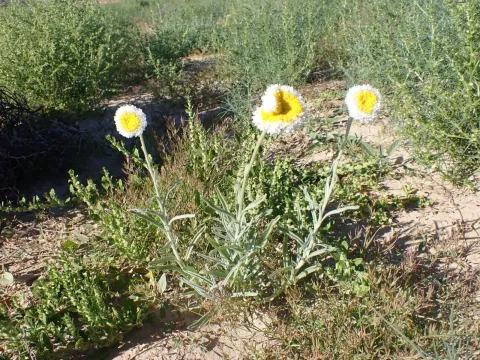
Polycalymma stuartii is an endemic plant native to the arid regions of Australia. In natural conditions, seeds germinate after heavy rainfall, which occurs irregularly in these arid zones.
What the section contains

Polycalymma
In cultivation or during introduction attempts, sowing should be carried out during a period mimicking the onset of the wet season. Seeds require stratification or thermal treatment characteristic of desert soils.
The growing substrate should be as close as possible to the sandy soils of Central Australia. It is essential to ensure excellent drainage to prevent embryo rot during the first watering.
Sowing depth should be minimal, as in nature, seeds often germinate directly from the topsoil layer after floodwaters recede.
The germination period depends on the stability of the temperature regime, with an optimal range of 20–25 degrees Celsius.
This crop belongs to the Asteraceae family. It is perfectly adapted to life in the extremely dry conditions of deserts and semi-deserts.
Polycalymma prefers well-lit areas with direct sunlight. Shading negatively affects the plant's growth rates and flowering performance.
The soil must be sandy or loamy-sand, with low organic matter content and a neutral or slightly alkaline reaction.
The plant is extremely sensitive to excessive soil moisture. Water stagnation in the root system is a critical factor leading to the death of the crop.
Agrotechnical requirements focus on minimizing interference with the plant's natural growth, as it is accustomed to the sparse resources of the Australian outback.
The main threats to Polycalymma development in natural conditions are sudden changes in the hydrological regime.
Under cultivation, the primary issue is root rot, which develops if the drainage regime is violated or the substrate becomes waterlogged.
Pests in the typical agronomic sense are not recorded for this species, but during introduction, it may be affected by local aphids or spider mites.
Fungal diseases caused by high air humidity pose a serious danger to the plant's delicate tissues.
Competition from weeds during artificial cultivation suppresses the growth of Polycalymma, thus requiring thorough weeding during early stages.