
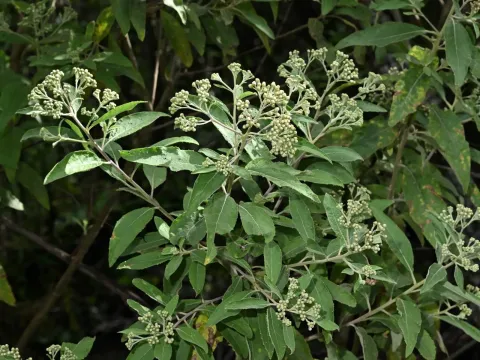
Pluchea carolinensis
Pluchea carolinensis
Pluchea carolinensis, a member of the Asteraceae family, is typically propagated through seeds or stem cuttings to maintain the genetic integrity of the shrub.
What the section contains
Pluchea carolinensis
The sowing process is ideally performed in early spring under controlled nursery conditions, providing the constant warmth required for successful germination.
Seeds are surface-sown in a well-draining, moist seed-starting mix, as they are light-dependent for optimal sprouting and early development.
Vegetative propagation using semi-hardwood cuttings is a reliable method that yields results within several weeks when handled in a propagation chamber.
Proper spacing is crucial when transplanting seedlings into the field to avoid overcrowding and to promote vigorous branching during the primary growing season.
Native to the Caribbean and parts of tropical America, this plant thrives in full sun exposure and is highly adapted to tropical and subtropical climates.
The species is remarkably versatile regarding soil types, though it performs best in sandy, fertile, and well-aerated substrates with efficient drainage.
It exhibits a high tolerance for saline conditions, which makes it an excellent candidate for coastal landscaping and reclamation projects in maritime areas.
Temperature management is critical; Pluchea carolinensis is frost-sensitive and requires a consistent temperature range between 20 and 30 degrees Celsius.
Regular maintenance involves light pruning to encourage bushiness and nutrient supplementation to support the rapid growth characteristic of the species.
Harvesting for medicinal or botanical purposes is typically focused on the foliage and flowering tops, which are collected during the peak of the growth phase.
The leaves are often harvested by hand using sharp, sanitized pruning tools to minimize mechanical damage and prevent the entry of pathogens into the stems.
After collection, the plant material requires rapid drying in a shaded, well-ventilated area to prevent fermentation and preserve the chemical composition of the leaves.
Proper storage involves keeping the dried product in airtight containers away from direct sunlight to maintain its quality and potency for further utilization.
Strategic harvesting cycles allow the plant to regenerate effectively, ensuring a sustainable yield over several growing seasons without depleting the plant's resources.
Common pests affecting Pluchea carolinensis include aphids, mealybugs, and spider mites, which can thrive in stagnant air or low-humidity environments.
Fungal pathogens like powdery mildew may arise if humidity levels remain excessive and air circulation is not maintained effectively within the dense shrubbery.
Root rot is the most common physiological threat, often caused by over-irrigation or planting in compacted soils that prevent water from draining freely.
Implementing an integrated pest management strategy, including the use of neem oil or biological controls, is effective in keeping pest populations under control.
Regular inspection of the underside of leaves and new growth points is the most efficient way to detect and mitigate potential threats before they spread.